

This is a good one. I've got an NSD server with 4x 16GB fibre connections coming in and 1x FDR10 and 1x QDR connection going out to the clients. I was having a really hard time getting anything resembling sensible performance out of it (4-5Gb/s writes but maybe 1.2Gb/s for reads). The back-end is a DDN SFA12K and I *know* it can do better than that. I don't remember quite how I figured this out but simply by running "openssl speed -multi 16" on the nsd server to drive up the load I saw an almost 4x performance jump which is pretty much goes against every sysadmin fiber in me (i.e. "drive up the cpu load with unrelated crap to quadruple your i/o performance"). This feels like some type of C-states frequency scaling shenanigans that I haven't quite ironed down yet. I booted the box with the following kernel parameters "intel_idle.max_cstate=0 processor.max_cstate=0" which didn't seem to make much of a difference. I also tried setting the frequency governer to userspace and setting the minimum frequency to 2.6ghz (it's a 2.6ghz cpu). None of that really matters-- I still have to run something to drive up the CPU load and then performance improves. I'm wondering if this could be an issue with the C1E state? I'm curious if anyone has seen anything like this. The node is a dx360 M4 (Sandybridge) with 16 2.6GHz cores and 32GB of RAM. -Aaron -- Aaron Knister NASA Center for Climate Simulation (Code 606.2) Goddard Space Flight Center (301) 286-2776

Maybe its related to interrupt handlers somehow? You drive the load up on one socket, you push all the interrupt handling to the other socket where the fabric card is attached? Dunno ... (Though I am intrigued you use idataplex nodes as NSD servers, I assume its some 2U gpu-tray riser one or something !) Simon ________________________________________ From: gpfsug-discuss-bounces@spectrumscale.org [gpfsug-discuss-bounces@spectrumscale.org] on behalf of Aaron Knister [aaron.s.knister@nasa.gov] Sent: 17 February 2017 15:52 To: gpfsug main discussion list Subject: [gpfsug-discuss] bizarre performance behavior This is a good one. I've got an NSD server with 4x 16GB fibre connections coming in and 1x FDR10 and 1x QDR connection going out to the clients. I was having a really hard time getting anything resembling sensible performance out of it (4-5Gb/s writes but maybe 1.2Gb/s for reads). The back-end is a DDN SFA12K and I *know* it can do better than that. I don't remember quite how I figured this out but simply by running "openssl speed -multi 16" on the nsd server to drive up the load I saw an almost 4x performance jump which is pretty much goes against every sysadmin fiber in me (i.e. "drive up the cpu load with unrelated crap to quadruple your i/o performance"). This feels like some type of C-states frequency scaling shenanigans that I haven't quite ironed down yet. I booted the box with the following kernel parameters "intel_idle.max_cstate=0 processor.max_cstate=0" which didn't seem to make much of a difference. I also tried setting the frequency governer to userspace and setting the minimum frequency to 2.6ghz (it's a 2.6ghz cpu). None of that really matters-- I still have to run something to drive up the CPU load and then performance improves. I'm wondering if this could be an issue with the C1E state? I'm curious if anyone has seen anything like this. The node is a dx360 M4 (Sandybridge) with 16 2.6GHz cores and 32GB of RAM. -Aaron -- Aaron Knister NASA Center for Climate Simulation (Code 606.2) Goddard Space Flight Center (301) 286-2776 _______________________________________________ gpfsug-discuss mailing list gpfsug-discuss at spectrumscale.org http://gpfsug.org/mailman/listinfo/gpfsug-discuss
Well, I'm somewhat scrounging for hardware. This is in our test environment :) And yep, it's got the 2U gpu-tray in it although even without the riser it has 2 PCIe slots onboard (excluding the on-board dual-port mezz card) so I think it would make a fine NSD server even without the riser. -Aaron On 2/17/17 11:43 AM, Simon Thompson (Research Computing - IT Services) wrote:
Maybe its related to interrupt handlers somehow? You drive the load up on one socket, you push all the interrupt handling to the other socket where the fabric card is attached?
Dunno ... (Though I am intrigued you use idataplex nodes as NSD servers, I assume its some 2U gpu-tray riser one or something !)
Simon ________________________________________ From: gpfsug-discuss-bounces@spectrumscale.org [gpfsug-discuss-bounces@spectrumscale.org] on behalf of Aaron Knister [aaron.s.knister@nasa.gov] Sent: 17 February 2017 15:52 To: gpfsug main discussion list Subject: [gpfsug-discuss] bizarre performance behavior
This is a good one. I've got an NSD server with 4x 16GB fibre connections coming in and 1x FDR10 and 1x QDR connection going out to the clients. I was having a really hard time getting anything resembling sensible performance out of it (4-5Gb/s writes but maybe 1.2Gb/s for reads). The back-end is a DDN SFA12K and I *know* it can do better than that.
I don't remember quite how I figured this out but simply by running "openssl speed -multi 16" on the nsd server to drive up the load I saw an almost 4x performance jump which is pretty much goes against every sysadmin fiber in me (i.e. "drive up the cpu load with unrelated crap to quadruple your i/o performance").
This feels like some type of C-states frequency scaling shenanigans that I haven't quite ironed down yet. I booted the box with the following kernel parameters "intel_idle.max_cstate=0 processor.max_cstate=0" which didn't seem to make much of a difference. I also tried setting the frequency governer to userspace and setting the minimum frequency to 2.6ghz (it's a 2.6ghz cpu). None of that really matters-- I still have to run something to drive up the CPU load and then performance improves.
I'm wondering if this could be an issue with the C1E state? I'm curious if anyone has seen anything like this. The node is a dx360 M4 (Sandybridge) with 16 2.6GHz cores and 32GB of RAM.
-Aaron
-- Aaron Knister NASA Center for Climate Simulation (Code 606.2) Goddard Space Flight Center (301) 286-2776 _______________________________________________ gpfsug-discuss mailing list gpfsug-discuss at spectrumscale.org http://gpfsug.org/mailman/listinfo/gpfsug-discuss _______________________________________________ gpfsug-discuss mailing list gpfsug-discuss at spectrumscale.org http://gpfsug.org/mailman/listinfo/gpfsug-discuss
-- Aaron Knister NASA Center for Climate Simulation (Code 606.2) Goddard Space Flight Center (301) 286-2776

I just had a similar experience from a sandisk infiniflash system SAS-attached to s single host. Gpfsperf reported 3,2 Gbyte/s for writes. and 250-300 Mbyte/s on sequential reads!! Random reads were on the order of 2 Gbyte/s. After a bit head scratching snd fumbling around I found out that reducing maxMBpS from 10000 to 100 fixed the problem! Digging further I found that reducing prefetchThreads from default=72 to 32 also fixed it, while leaving maxMBpS at 10000. Can now also read at 3,2 GByte/s. Could something like this be the problem on your box as well? -jf fre. 17. feb. 2017 kl. 18.13 skrev Aaron Knister <aaron.s.knister@nasa.gov>:
Well, I'm somewhat scrounging for hardware. This is in our test environment :) And yep, it's got the 2U gpu-tray in it although even without the riser it has 2 PCIe slots onboard (excluding the on-board dual-port mezz card) so I think it would make a fine NSD server even without the riser.
-Aaron
On 2/17/17 11:43 AM, Simon Thompson (Research Computing - IT Services) wrote:
Maybe its related to interrupt handlers somehow? You drive the load up on one socket, you push all the interrupt handling to the other socket where the fabric card is attached?
Dunno ... (Though I am intrigued you use idataplex nodes as NSD servers, I assume its some 2U gpu-tray riser one or something !)
Simon ________________________________________ From: gpfsug-discuss-bounces@spectrumscale.org [ gpfsug-discuss-bounces@spectrumscale.org] on behalf of Aaron Knister [ aaron.s.knister@nasa.gov] Sent: 17 February 2017 15:52 To: gpfsug main discussion list Subject: [gpfsug-discuss] bizarre performance behavior
This is a good one. I've got an NSD server with 4x 16GB fibre connections coming in and 1x FDR10 and 1x QDR connection going out to the clients. I was having a really hard time getting anything resembling sensible performance out of it (4-5Gb/s writes but maybe 1.2Gb/s for reads). The back-end is a DDN SFA12K and I *know* it can do better than that.
I don't remember quite how I figured this out but simply by running "openssl speed -multi 16" on the nsd server to drive up the load I saw an almost 4x performance jump which is pretty much goes against every sysadmin fiber in me (i.e. "drive up the cpu load with unrelated crap to quadruple your i/o performance").
This feels like some type of C-states frequency scaling shenanigans that I haven't quite ironed down yet. I booted the box with the following kernel parameters "intel_idle.max_cstate=0 processor.max_cstate=0" which didn't seem to make much of a difference. I also tried setting the frequency governer to userspace and setting the minimum frequency to 2.6ghz (it's a 2.6ghz cpu). None of that really matters-- I still have to run something to drive up the CPU load and then performance improves.
I'm wondering if this could be an issue with the C1E state? I'm curious if anyone has seen anything like this. The node is a dx360 M4 (Sandybridge) with 16 2.6GHz cores and 32GB of RAM.
-Aaron
-- Aaron Knister NASA Center for Climate Simulation (Code 606.2) Goddard Space Flight Center (301) 286-2776 _______________________________________________ gpfsug-discuss mailing list gpfsug-discuss at spectrumscale.org http://gpfsug.org/mailman/listinfo/gpfsug-discuss _______________________________________________ gpfsug-discuss mailing list gpfsug-discuss at spectrumscale.org http://gpfsug.org/mailman/listinfo/gpfsug-discuss
-- Aaron Knister NASA Center for Climate Simulation (Code 606.2) Goddard Space Flight Center (301) 286-2776 _______________________________________________ gpfsug-discuss mailing list gpfsug-discuss at spectrumscale.org http://gpfsug.org/mailman/listinfo/gpfsug-discuss

Hi, Having an issue that looks the same as this one: We can do sequential writes to the filesystem at 7,8 GB/s total , which is the expected speed for our current storage backend. While we have even better performance with sequential reads on raw storage LUNS, using GPFS we can only reach 1GB/s in total (each nsd server seems limited by 0,5GB/s) independent of the number of clients (1,2,4,..) or ways we tested (fio,dd). We played with blockdev params, MaxMBps, PrefetchThreads, hyperthreading, c1e/cstates, .. as discussed in this thread, but nothing seems to impact this read performance. Any ideas? Thanks! Kenneth On 17/02/17 19:29, Jan-Frode Myklebust wrote:
I just had a similar experience from a sandisk infiniflash system SAS-attached to s single host. Gpfsperf reported 3,2 Gbyte/s for writes. and 250-300 Mbyte/s on sequential reads!! Random reads were on the order of 2 Gbyte/s.
After a bit head scratching snd fumbling around I found out that reducing maxMBpS from 10000 to 100 fixed the problem! Digging further I found that reducing prefetchThreads from default=72 to 32 also fixed it, while leaving maxMBpS at 10000. Can now also read at 3,2 GByte/s.
Could something like this be the problem on your box as well?
-jf fre. 17. feb. 2017 kl. 18.13 skrev Aaron Knister <aaron.s.knister@nasa.gov <mailto:aaron.s.knister@nasa.gov>>:
Well, I'm somewhat scrounging for hardware. This is in our test environment :) And yep, it's got the 2U gpu-tray in it although even without the riser it has 2 PCIe slots onboard (excluding the on-board dual-port mezz card) so I think it would make a fine NSD server even without the riser.
-Aaron
On 2/17/17 11:43 AM, Simon Thompson (Research Computing - IT Services) wrote: > Maybe its related to interrupt handlers somehow? You drive the load up on one socket, you push all the interrupt handling to the other socket where the fabric card is attached? > > Dunno ... (Though I am intrigued you use idataplex nodes as NSD servers, I assume its some 2U gpu-tray riser one or something !) > > Simon > ________________________________________ > From: gpfsug-discuss-bounces@spectrumscale.org <mailto:gpfsug-discuss-bounces@spectrumscale.org> [gpfsug-discuss-bounces@spectrumscale.org <mailto:gpfsug-discuss-bounces@spectrumscale.org>] on behalf of Aaron Knister [aaron.s.knister@nasa.gov <mailto:aaron.s.knister@nasa.gov>] > Sent: 17 February 2017 15:52 > To: gpfsug main discussion list > Subject: [gpfsug-discuss] bizarre performance behavior > > This is a good one. I've got an NSD server with 4x 16GB fibre > connections coming in and 1x FDR10 and 1x QDR connection going out to > the clients. I was having a really hard time getting anything resembling > sensible performance out of it (4-5Gb/s writes but maybe 1.2Gb/s for > reads). The back-end is a DDN SFA12K and I *know* it can do better than > that. > > I don't remember quite how I figured this out but simply by running > "openssl speed -multi 16" on the nsd server to drive up the load I saw > an almost 4x performance jump which is pretty much goes against every > sysadmin fiber in me (i.e. "drive up the cpu load with unrelated crap to > quadruple your i/o performance"). > > This feels like some type of C-states frequency scaling shenanigans that > I haven't quite ironed down yet. I booted the box with the following > kernel parameters "intel_idle.max_cstate=0 processor.max_cstate=0" which > didn't seem to make much of a difference. I also tried setting the > frequency governer to userspace and setting the minimum frequency to > 2.6ghz (it's a 2.6ghz cpu). None of that really matters-- I still have > to run something to drive up the CPU load and then performance improves. > > I'm wondering if this could be an issue with the C1E state? I'm curious > if anyone has seen anything like this. The node is a dx360 M4 > (Sandybridge) with 16 2.6GHz cores and 32GB of RAM. > > -Aaron > > -- > Aaron Knister > NASA Center for Climate Simulation (Code 606.2) > Goddard Space Flight Center > (301) 286-2776 > _______________________________________________ > gpfsug-discuss mailing list > gpfsug-discuss at spectrumscale.org <http://spectrumscale.org> > http://gpfsug.org/mailman/listinfo/gpfsug-discuss > _______________________________________________ > gpfsug-discuss mailing list > gpfsug-discuss at spectrumscale.org <http://spectrumscale.org> > http://gpfsug.org/mailman/listinfo/gpfsug-discuss >
-- Aaron Knister NASA Center for Climate Simulation (Code 606.2) Goddard Space Flight Center (301) 286-2776 _______________________________________________ gpfsug-discuss mailing list gpfsug-discuss at spectrumscale.org <http://spectrumscale.org> http://gpfsug.org/mailman/listinfo/gpfsug-discuss
_______________________________________________ gpfsug-discuss mailing list gpfsug-discuss at spectrumscale.org http://gpfsug.org/mailman/listinfo/gpfsug-discuss
Interesting. Could you share a little more about your architecture? Is it possible to mount the fs on an NSD server and do some dd's from the fs on the NSD server? If that gives you decent performance perhaps try NSDPERF next https://www.ibm.com/developerworks/community/wikis/home?lang=en#!/wiki/Gener... -Aaron On April 20, 2017 at 10:53:47 EDT, Kenneth Waegeman <kenneth.waegeman@ugent.be> wrote: Hi, Having an issue that looks the same as this one: We can do sequential writes to the filesystem at 7,8 GB/s total , which is the expected speed for our current storage backend. While we have even better performance with sequential reads on raw storage LUNS, using GPFS we can only reach 1GB/s in total (each nsd server seems limited by 0,5GB/s) independent of the number of clients (1,2,4,..) or ways we tested (fio,dd). We played with blockdev params, MaxMBps, PrefetchThreads, hyperthreading, c1e/cstates, .. as discussed in this thread, but nothing seems to impact this read performance. Any ideas? Thanks! Kenneth On 17/02/17 19:29, Jan-Frode Myklebust wrote: I just had a similar experience from a sandisk infiniflash system SAS-attached to s single host. Gpfsperf reported 3,2 Gbyte/s for writes. and 250-300 Mbyte/s on sequential reads!! Random reads were on the order of 2 Gbyte/s. After a bit head scratching snd fumbling around I found out that reducing maxMBpS from 10000 to 100 fixed the problem! Digging further I found that reducing prefetchThreads from default=72 to 32 also fixed it, while leaving maxMBpS at 10000. Can now also read at 3,2 GByte/s. Could something like this be the problem on your box as well? -jf fre. 17. feb. 2017 kl. 18.13 skrev Aaron Knister <aaron.s.knister@nasa.gov<mailto:aaron.s.knister@nasa.gov>>: Well, I'm somewhat scrounging for hardware. This is in our test environment :) And yep, it's got the 2U gpu-tray in it although even without the riser it has 2 PCIe slots onboard (excluding the on-board dual-port mezz card) so I think it would make a fine NSD server even without the riser. -Aaron On 2/17/17 11:43 AM, Simon Thompson (Research Computing - IT Services) wrote:
Maybe its related to interrupt handlers somehow? You drive the load up on one socket, you push all the interrupt handling to the other socket where the fabric card is attached?
Dunno ... (Though I am intrigued you use idataplex nodes as NSD servers, I assume its some 2U gpu-tray riser one or something !)
Simon ________________________________________ From: gpfsug-discuss-bounces@spectrumscale.org<mailto:gpfsug-discuss-bounces@spectrumscale.org> [gpfsug-discuss-bounces@spectrumscale.org<mailto:gpfsug-discuss-bounces@spectrumscale.org>] on behalf of Aaron Knister [aaron.s.knister@nasa.gov<mailto:aaron.s.knister@nasa.gov>] Sent: 17 February 2017 15:52 To: gpfsug main discussion list Subject: [gpfsug-discuss] bizarre performance behavior
This is a good one. I've got an NSD server with 4x 16GB fibre connections coming in and 1x FDR10 and 1x QDR connection going out to the clients. I was having a really hard time getting anything resembling sensible performance out of it (4-5Gb/s writes but maybe 1.2Gb/s for reads). The back-end is a DDN SFA12K and I *know* it can do better than that.
I don't remember quite how I figured this out but simply by running "openssl speed -multi 16" on the nsd server to drive up the load I saw an almost 4x performance jump which is pretty much goes against every sysadmin fiber in me (i.e. "drive up the cpu load with unrelated crap to quadruple your i/o performance").
This feels like some type of C-states frequency scaling shenanigans that I haven't quite ironed down yet. I booted the box with the following kernel parameters "intel_idle.max_cstate=0 processor.max_cstate=0" which didn't seem to make much of a difference. I also tried setting the frequency governer to userspace and setting the minimum frequency to 2.6ghz (it's a 2.6ghz cpu). None of that really matters-- I still have to run something to drive up the CPU load and then performance improves.
I'm wondering if this could be an issue with the C1E state? I'm curious if anyone has seen anything like this. The node is a dx360 M4 (Sandybridge) with 16 2.6GHz cores and 32GB of RAM.
-Aaron
-- Aaron Knister NASA Center for Climate Simulation (Code 606.2) Goddard Space Flight Center (301) 286-2776 _______________________________________________ gpfsug-discuss mailing list gpfsug-discuss at spectrumscale.org<http://spectrumscale.org> http://gpfsug.org/mailman/listinfo/gpfsug-discuss _______________________________________________ gpfsug-discuss mailing list gpfsug-discuss at spectrumscale.org<http://spectrumscale.org> http://gpfsug.org/mailman/listinfo/gpfsug-discuss
-- Aaron Knister NASA Center for Climate Simulation (Code 606.2) Goddard Space Flight Center (301) 286-2776 _______________________________________________ gpfsug-discuss mailing list gpfsug-discuss at spectrumscale.org<http://spectrumscale.org> http://gpfsug.org/mailman/listinfo/gpfsug-discuss _______________________________________________ gpfsug-discuss mailing list gpfsug-discuss at spectrumscale.org http://gpfsug.org/mailman/listinfo/gpfsug-discuss
Hi, We are running a test setup with 2 NSD Servers backed by 4 Dell Powervaults MD3460s. nsd00 is primary serving LUNS of controller A of the 4 powervaults, nsd02 is primary serving LUNS of controller B. We are testing from 2 testing machines connected to the nsds with infiniband, verbs enabled. When we do dd from the NSD servers, we see indeed performance going to 5.8GB/s for one nsd, 7.2GB/s for the two! So it looks like GPFS is able to get the data at a decent speed. Since we can write from the clients at a good speed, I didn't suspect the communication between clients and nsds being the issue, especially since total performance stays the same using 1 or multiple clients. I'll use the nsdperf tool to see if we can find anything, thanks! K On 20/04/17 17:04, Knister, Aaron S. (GSFC-606.2)[COMPUTER SCIENCE CORP] wrote:
Interesting. Could you share a little more about your architecture? Is it possible to mount the fs on an NSD server and do some dd's from the fs on the NSD server? If that gives you decent performance perhaps try NSDPERF next https://www.ibm.com/developerworks/community/wikis/home?lang=en#!/wiki/Gener...
-Aaron
On April 20, 2017 at 10:53:47 EDT, Kenneth Waegeman <kenneth.waegeman@ugent.be> wrote:
Hi,
Having an issue that looks the same as this one:
We can do sequential writes to the filesystem at 7,8 GB/s total , which is the expected speed for our current storage backend. While we have even better performance with sequential reads on raw storage LUNS, using GPFS we can only reach 1GB/s in total (each nsd server seems limited by 0,5GB/s) independent of the number of clients (1,2,4,..) or ways we tested (fio,dd). We played with blockdev params, MaxMBps, PrefetchThreads, hyperthreading, c1e/cstates, .. as discussed in this thread, but nothing seems to impact this read performance.
Any ideas?
Thanks!
Kenneth
On 17/02/17 19:29, Jan-Frode Myklebust wrote:
I just had a similar experience from a sandisk infiniflash system SAS-attached to s single host. Gpfsperf reported 3,2 Gbyte/s for writes. and 250-300 Mbyte/s on sequential reads!! Random reads were on the order of 2 Gbyte/s.
After a bit head scratching snd fumbling around I found out that reducing maxMBpS from 10000 to 100 fixed the problem! Digging further I found that reducing prefetchThreads from default=72 to 32 also fixed it, while leaving maxMBpS at 10000. Can now also read at 3,2 GByte/s.
Could something like this be the problem on your box as well?
-jf fre. 17. feb. 2017 kl. 18.13 skrev Aaron Knister <aaron.s.knister@nasa.gov <mailto:aaron.s.knister@nasa.gov>>:
Well, I'm somewhat scrounging for hardware. This is in our test environment :) And yep, it's got the 2U gpu-tray in it although even without the riser it has 2 PCIe slots onboard (excluding the on-board dual-port mezz card) so I think it would make a fine NSD server even without the riser.
-Aaron
On 2/17/17 11:43 AM, Simon Thompson (Research Computing - IT Services) wrote: > Maybe its related to interrupt handlers somehow? You drive the load up on one socket, you push all the interrupt handling to the other socket where the fabric card is attached? > > Dunno ... (Though I am intrigued you use idataplex nodes as NSD servers, I assume its some 2U gpu-tray riser one or something !) > > Simon > ________________________________________ > From: gpfsug-discuss-bounces@spectrumscale.org <mailto:gpfsug-discuss-bounces@spectrumscale.org> [gpfsug-discuss-bounces@spectrumscale.org <mailto:gpfsug-discuss-bounces@spectrumscale.org>] on behalf of Aaron Knister [aaron.s.knister@nasa.gov <mailto:aaron.s.knister@nasa.gov>] > Sent: 17 February 2017 15:52 > To: gpfsug main discussion list > Subject: [gpfsug-discuss] bizarre performance behavior > > This is a good one. I've got an NSD server with 4x 16GB fibre > connections coming in and 1x FDR10 and 1x QDR connection going out to > the clients. I was having a really hard time getting anything resembling > sensible performance out of it (4-5Gb/s writes but maybe 1.2Gb/s for > reads). The back-end is a DDN SFA12K and I *know* it can do better than > that. > > I don't remember quite how I figured this out but simply by running > "openssl speed -multi 16" on the nsd server to drive up the load I saw > an almost 4x performance jump which is pretty much goes against every > sysadmin fiber in me (i.e. "drive up the cpu load with unrelated crap to > quadruple your i/o performance"). > > This feels like some type of C-states frequency scaling shenanigans that > I haven't quite ironed down yet. I booted the box with the following > kernel parameters "intel_idle.max_cstate=0 processor.max_cstate=0" which > didn't seem to make much of a difference. I also tried setting the > frequency governer to userspace and setting the minimum frequency to > 2.6ghz (it's a 2.6ghz cpu). None of that really matters-- I still have > to run something to drive up the CPU load and then performance improves. > > I'm wondering if this could be an issue with the C1E state? I'm curious > if anyone has seen anything like this. The node is a dx360 M4 > (Sandybridge) with 16 2.6GHz cores and 32GB of RAM. > > -Aaron > > -- > Aaron Knister > NASA Center for Climate Simulation (Code 606.2) > Goddard Space Flight Center > (301) 286-2776 > _______________________________________________ > gpfsug-discuss mailing list > gpfsug-discuss at spectrumscale.org <http://spectrumscale.org> > http://gpfsug.org/mailman/listinfo/gpfsug-discuss > _______________________________________________ > gpfsug-discuss mailing list > gpfsug-discuss at spectrumscale.org <http://spectrumscale.org> > http://gpfsug.org/mailman/listinfo/gpfsug-discuss >
-- Aaron Knister NASA Center for Climate Simulation (Code 606.2) Goddard Space Flight Center (301) 286-2776 _______________________________________________ gpfsug-discuss mailing list gpfsug-discuss at spectrumscale.org <http://spectrumscale.org> http://gpfsug.org/mailman/listinfo/gpfsug-discuss
_______________________________________________ gpfsug-discuss mailing list gpfsug-discuss at spectrumscale.org http://gpfsug.org/mailman/listinfo/gpfsug-discuss
_______________________________________________ gpfsug-discuss mailing list gpfsug-discuss at spectrumscale.org http://gpfsug.org/mailman/listinfo/gpfsug-discuss
Fantastic news! It might also be worth running "cpupower monitor" or "turbostat" on your NSD servers while you're running dd tests from the clients to see what CPU frequency your cores are actually running at. A typical NSD server workload (especially with IB verbs and for reads) can be pretty light on CPU which might not prompt your CPU crew governor to up the frequency (which can affect throughout). If your frequency scaling governor isn't kicking up the frequency of your CPUs I've seen that cause this behavior in my testing. -Aaron On April 21, 2017 at 05:43:40 EDT, Kenneth Waegeman <kenneth.waegeman@ugent.be> wrote: Hi, We are running a test setup with 2 NSD Servers backed by 4 Dell Powervaults MD3460s. nsd00 is primary serving LUNS of controller A of the 4 powervaults, nsd02 is primary serving LUNS of controller B. We are testing from 2 testing machines connected to the nsds with infiniband, verbs enabled. When we do dd from the NSD servers, we see indeed performance going to 5.8GB/s for one nsd, 7.2GB/s for the two! So it looks like GPFS is able to get the data at a decent speed. Since we can write from the clients at a good speed, I didn't suspect the communication between clients and nsds being the issue, especially since total performance stays the same using 1 or multiple clients. I'll use the nsdperf tool to see if we can find anything, thanks! K On 20/04/17 17:04, Knister, Aaron S. (GSFC-606.2)[COMPUTER SCIENCE CORP] wrote: Interesting. Could you share a little more about your architecture? Is it possible to mount the fs on an NSD server and do some dd's from the fs on the NSD server? If that gives you decent performance perhaps try NSDPERF next https://www.ibm.com/developerworks/community/wikis/home?lang=en#!/wiki/Gener... -Aaron On April 20, 2017 at 10:53:47 EDT, Kenneth Waegeman <kenneth.waegeman@ugent.be><mailto:kenneth.waegeman@ugent.be> wrote: Hi, Having an issue that looks the same as this one: We can do sequential writes to the filesystem at 7,8 GB/s total , which is the expected speed for our current storage backend. While we have even better performance with sequential reads on raw storage LUNS, using GPFS we can only reach 1GB/s in total (each nsd server seems limited by 0,5GB/s) independent of the number of clients (1,2,4,..) or ways we tested (fio,dd). We played with blockdev params, MaxMBps, PrefetchThreads, hyperthreading, c1e/cstates, .. as discussed in this thread, but nothing seems to impact this read performance. Any ideas? Thanks! Kenneth On 17/02/17 19:29, Jan-Frode Myklebust wrote: I just had a similar experience from a sandisk infiniflash system SAS-attached to s single host. Gpfsperf reported 3,2 Gbyte/s for writes. and 250-300 Mbyte/s on sequential reads!! Random reads were on the order of 2 Gbyte/s. After a bit head scratching snd fumbling around I found out that reducing maxMBpS from 10000 to 100 fixed the problem! Digging further I found that reducing prefetchThreads from default=72 to 32 also fixed it, while leaving maxMBpS at 10000. Can now also read at 3,2 GByte/s. Could something like this be the problem on your box as well? -jf fre. 17. feb. 2017 kl. 18.13 skrev Aaron Knister <<mailto:aaron.s.knister@nasa.gov>aaron.s.knister@nasa.gov<mailto:aaron.s.knister@nasa.gov>>: Well, I'm somewhat scrounging for hardware. This is in our test environment :) And yep, it's got the 2U gpu-tray in it although even without the riser it has 2 PCIe slots onboard (excluding the on-board dual-port mezz card) so I think it would make a fine NSD server even without the riser. -Aaron On 2/17/17 11:43 AM, Simon Thompson (Research Computing - IT Services) wrote:
Maybe its related to interrupt handlers somehow? You drive the load up on one socket, you push all the interrupt handling to the other socket where the fabric card is attached?
Dunno ... (Though I am intrigued you use idataplex nodes as NSD servers, I assume its some 2U gpu-tray riser one or something !)
Simon ________________________________________ From: gpfsug-discuss-bounces@spectrumscale.org<mailto:gpfsug-discuss-bounces@spectrumscale.org> [<mailto:gpfsug-discuss-bounces@spectrumscale.org>gpfsug-discuss-bounces@spectrumscale.org<mailto:gpfsug-discuss-bounces@spectrumscale.org>] on behalf of Aaron Knister [<mailto:aaron.s.knister@nasa.gov>aaron.s.knister@nasa.gov<mailto:aaron.s.knister@nasa.gov>] Sent: 17 February 2017 15:52 To: gpfsug main discussion list Subject: [gpfsug-discuss] bizarre performance behavior
This is a good one. I've got an NSD server with 4x 16GB fibre connections coming in and 1x FDR10 and 1x QDR connection going out to the clients. I was having a really hard time getting anything resembling sensible performance out of it (4-5Gb/s writes but maybe 1.2Gb/s for reads). The back-end is a DDN SFA12K and I *know* it can do better than that.
I don't remember quite how I figured this out but simply by running "openssl speed -multi 16" on the nsd server to drive up the load I saw an almost 4x performance jump which is pretty much goes against every sysadmin fiber in me (i.e. "drive up the cpu load with unrelated crap to quadruple your i/o performance").
This feels like some type of C-states frequency scaling shenanigans that I haven't quite ironed down yet. I booted the box with the following kernel parameters "intel_idle.max_cstate=0 processor.max_cstate=0" which didn't seem to make much of a difference. I also tried setting the frequency governer to userspace and setting the minimum frequency to 2.6ghz (it's a 2.6ghz cpu). None of that really matters-- I still have to run something to drive up the CPU load and then performance improves.
I'm wondering if this could be an issue with the C1E state? I'm curious if anyone has seen anything like this. The node is a dx360 M4 (Sandybridge) with 16 2.6GHz cores and 32GB of RAM.
-Aaron
-- Aaron Knister NASA Center for Climate Simulation (Code 606.2) Goddard Space Flight Center (301) 286-2776 _______________________________________________ gpfsug-discuss mailing list gpfsug-discuss at spectrumscale.org<http://spectrumscale.org> http://gpfsug.org/mailman/listinfo/gpfsug-discuss _______________________________________________ gpfsug-discuss mailing list gpfsug-discuss at spectrumscale.org<http://spectrumscale.org> http://gpfsug.org/mailman/listinfo/gpfsug-discuss
-- Aaron Knister NASA Center for Climate Simulation (Code 606.2) Goddard Space Flight Center (301) 286-2776 _______________________________________________ gpfsug-discuss mailing list gpfsug-discuss at spectrumscale.org<http://spectrumscale.org> http://gpfsug.org/mailman/listinfo/gpfsug-discuss _______________________________________________ gpfsug-discuss mailing list gpfsug-discuss at spectrumscale.org http://gpfsug.org/mailman/listinfo/gpfsug-discuss _______________________________________________ gpfsug-discuss mailing list gpfsug-discuss at spectrumscale.org http://gpfsug.org/mailman/listinfo/gpfsug-discuss

We had some luck making the client and server IB performance consistently decent by configuring tuned with the profile "latency-performance". The key is the line /usr/libexec/tuned/pmqos-static.py cpu_dma_latency=1 which prevents cpu from going to sleep just when the next burst of IB traffic is about to arrive. -- ddj Dave Johnson Brown University CCV On Apr 21, 2017, at 9:10 AM, Knister, Aaron S. (GSFC-606.2)[COMPUTER SCIENCE CORP] <aaron.s.knister@nasa.gov> wrote:
Fantastic news! It might also be worth running "cpupower monitor" or "turbostat" on your NSD servers while you're running dd tests from the clients to see what CPU frequency your cores are actually running at.
A typical NSD server workload (especially with IB verbs and for reads) can be pretty light on CPU which might not prompt your CPU crew governor to up the frequency (which can affect throughout). If your frequency scaling governor isn't kicking up the frequency of your CPUs I've seen that cause this behavior in my testing.
-Aaron
On April 21, 2017 at 05:43:40 EDT, Kenneth Waegeman <kenneth.waegeman@ugent.be> wrote:
Hi, We are running a test setup with 2 NSD Servers backed by 4 Dell Powervaults MD3460s. nsd00 is primary serving LUNS of controller A of the 4 powervaults, nsd02 is primary serving LUNS of controller B. We are testing from 2 testing machines connected to the nsds with infiniband, verbs enabled. When we do dd from the NSD servers, we see indeed performance going to 5.8GB/s for one nsd, 7.2GB/s for the two! So it looks like GPFS is able to get the data at a decent speed. Since we can write from the clients at a good speed, I didn't suspect the communication between clients and nsds being the issue, especially since total performance stays the same using 1 or multiple clients.
I'll use the nsdperf tool to see if we can find anything,
thanks!
K
On 20/04/17 17:04, Knister, Aaron S. (GSFC-606.2)[COMPUTER SCIENCE CORP] wrote:
Interesting. Could you share a little more about your architecture? Is it possible to mount the fs on an NSD server and do some dd's from the fs on the NSD server? If that gives you decent performance perhaps try NSDPERF next https://www.ibm.com/developerworks/community/wikis/home?lang=en#!/wiki/Gener... <https://www.ibm.com/developerworks/community/wikis/home?lang=en#!/wiki/Gener...>
-Aaron
On April 20, 2017 at 10:53:47 EDT, Kenneth Waegeman <kenneth.waegeman@ugent.be> <mailto:kenneth.waegeman@ugent.be> wrote:
Hi,
Having an issue that looks the same as this one:
We can do sequential writes to the filesystem at 7,8 GB/s total , which is the expected speed for our current storage backend. While we have even better performance with sequential reads on raw storage LUNS, using GPFS we can only reach 1GB/s in total (each nsd server seems limited by 0,5GB/s) independent of the number of clients (1,2,4,..) or ways we tested (fio,dd). We played with blockdev params, MaxMBps, PrefetchThreads, hyperthreading, c1e/cstates, .. as discussed in this thread, but nothing seems to impact this read performance. Any ideas?
Thanks!
Kenneth
On 17/02/17 19:29, Jan-Frode Myklebust wrote:
I just had a similar experience from a sandisk infiniflash system SAS-attached to s single host. Gpfsperf reported 3,2 Gbyte/s for writes. and 250-300 Mbyte/s on sequential reads!! Random reads were on the order of 2 Gbyte/s.
After a bit head scratching snd fumbling around I found out that reducing maxMBpS from 10000 to 100 fixed the problem! Digging further I found that reducing prefetchThreads from default=72 to 32 also fixed it, while leaving maxMBpS at 10000. Can now also read at 3,2 GByte/s.
Could something like this be the problem on your box as well?
-jf fre. 17. feb. 2017 kl. 18.13 skrev Aaron Knister < <mailto:aaron.s.knister@nasa.gov>aaron.s.knister@nasa.gov <mailto:aaron.s.knister@nasa.gov>>: Well, I'm somewhat scrounging for hardware. This is in our test environment :) And yep, it's got the 2U gpu-tray in it although even without the riser it has 2 PCIe slots onboard (excluding the on-board dual-port mezz card) so I think it would make a fine NSD server even without the riser.
-Aaron
On 2/17/17 11:43 AM, Simon Thompson (Research Computing - IT Services) wrote:
Maybe its related to interrupt handlers somehow? You drive the load up on one socket, you push all the interrupt handling to the other socket where the fabric card is attached?
Dunno ... (Though I am intrigued you use idataplex nodes as NSD servers, I assume its some 2U gpu-tray riser one or something !)
Simon ________________________________________ From: gpfsug-discuss-bounces@spectrumscale.org <mailto:gpfsug-discuss-bounces@spectrumscale.org> [ <mailto:gpfsug-discuss-bounces@spectrumscale.org>gpfsug-discuss-bounces@spectrumscale.org <mailto:gpfsug-discuss-bounces@spectrumscale.org>] on behalf of Aaron Knister [ <mailto:aaron.s.knister@nasa.gov>aaron.s.knister@nasa.gov <mailto:aaron.s.knister@nasa.gov>] Sent: 17 February 2017 15:52 To: gpfsug main discussion list Subject: [gpfsug-discuss] bizarre performance behavior
This is a good one. I've got an NSD server with 4x 16GB fibre connections coming in and 1x FDR10 and 1x QDR connection going out to the clients. I was having a really hard time getting anything resembling sensible performance out of it (4-5Gb/s writes but maybe 1.2Gb/s for reads). The back-end is a DDN SFA12K and I *know* it can do better than that.
I don't remember quite how I figured this out but simply by running "openssl speed -multi 16" on the nsd server to drive up the load I saw an almost 4x performance jump which is pretty much goes against every sysadmin fiber in me (i.e. "drive up the cpu load with unrelated crap to quadruple your i/o performance").
This feels like some type of C-states frequency scaling shenanigans that I haven't quite ironed down yet. I booted the box with the following kernel parameters "intel_idle.max_cstate=0 processor.max_cstate=0" which didn't seem to make much of a difference. I also tried setting the frequency governer to userspace and setting the minimum frequency to 2.6ghz (it's a 2.6ghz cpu). None of that really matters-- I still have to run something to drive up the CPU load and then performance improves.
I'm wondering if this could be an issue with the C1E state? I'm curious if anyone has seen anything like this. The node is a dx360 M4 (Sandybridge) with 16 2.6GHz cores and 32GB of RAM.
-Aaron
-- Aaron Knister NASA Center for Climate Simulation (Code 606.2) Goddard Space Flight Center (301) 286-2776 _______________________________________________ gpfsug-discuss mailing list gpfsug-discuss at spectrumscale.org <http://spectrumscale.org/> http://gpfsug.org/mailman/listinfo/gpfsug-discuss <http://gpfsug.org/mailman/listinfo/gpfsug-discuss> _______________________________________________ gpfsug-discuss mailing list gpfsug-discuss at spectrumscale.org <http://spectrumscale.org/> http://gpfsug.org/mailman/listinfo/gpfsug-discuss <http://gpfsug.org/mailman/listinfo/gpfsug-discuss>
-- Aaron Knister NASA Center for Climate Simulation (Code 606.2) Goddard Space Flight Center (301) 286-2776 _______________________________________________ gpfsug-discuss mailing list gpfsug-discuss at spectrumscale.org <http://spectrumscale.org/> http://gpfsug.org/mailman/listinfo/gpfsug-discuss <http://gpfsug.org/mailman/listinfo/gpfsug-discuss>
_______________________________________________ gpfsug-discuss mailing list gpfsug-discuss at spectrumscale.org http://gpfsug.org/mailman/listinfo/gpfsug-discuss <http://gpfsug.org/mailman/listinfo/gpfsug-discuss>
_______________________________________________ gpfsug-discuss mailing list gpfsug-discuss at spectrumscale.org http://gpfsug.org/mailman/listinfo/gpfsug-discuss <http://gpfsug.org/mailman/listinfo/gpfsug-discuss>
_______________________________________________ gpfsug-discuss mailing list gpfsug-discuss at spectrumscale.org http://gpfsug.org/mailman/listinfo/gpfsug-discuss

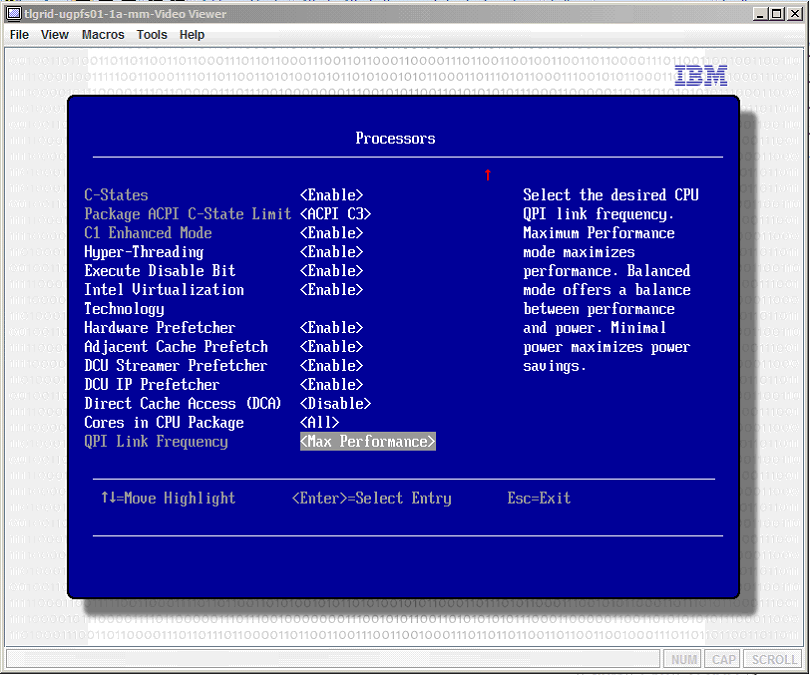
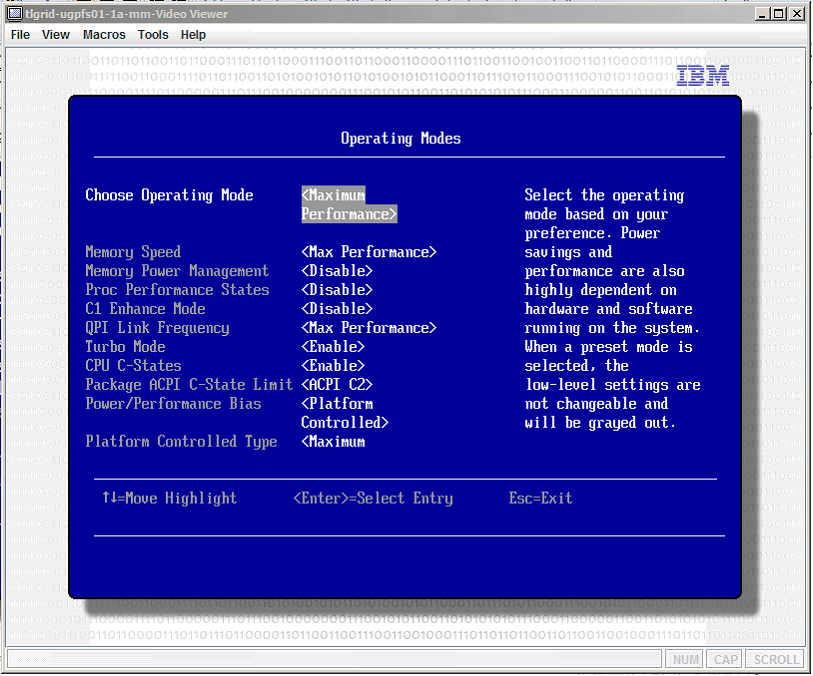
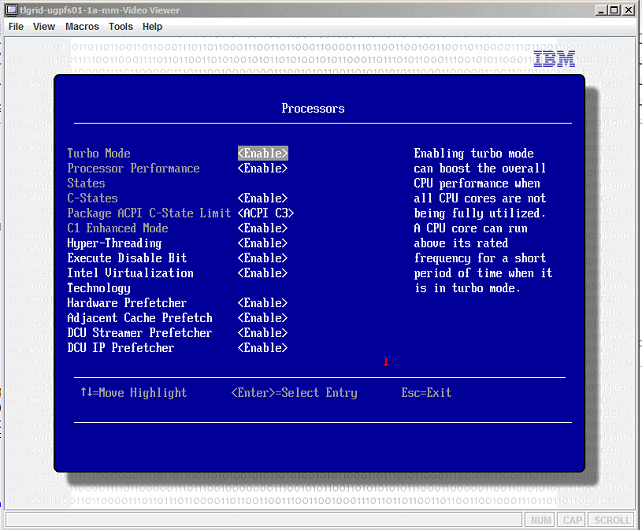
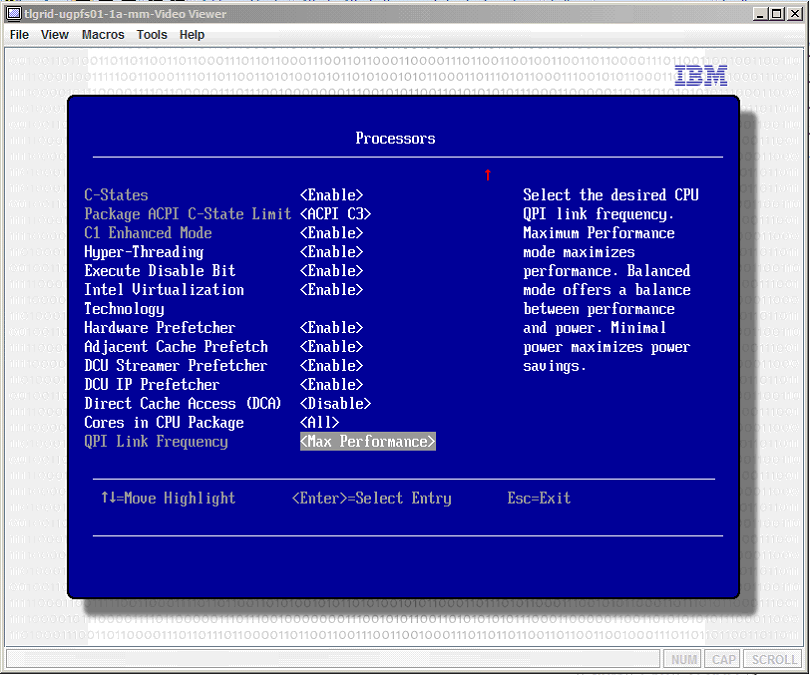
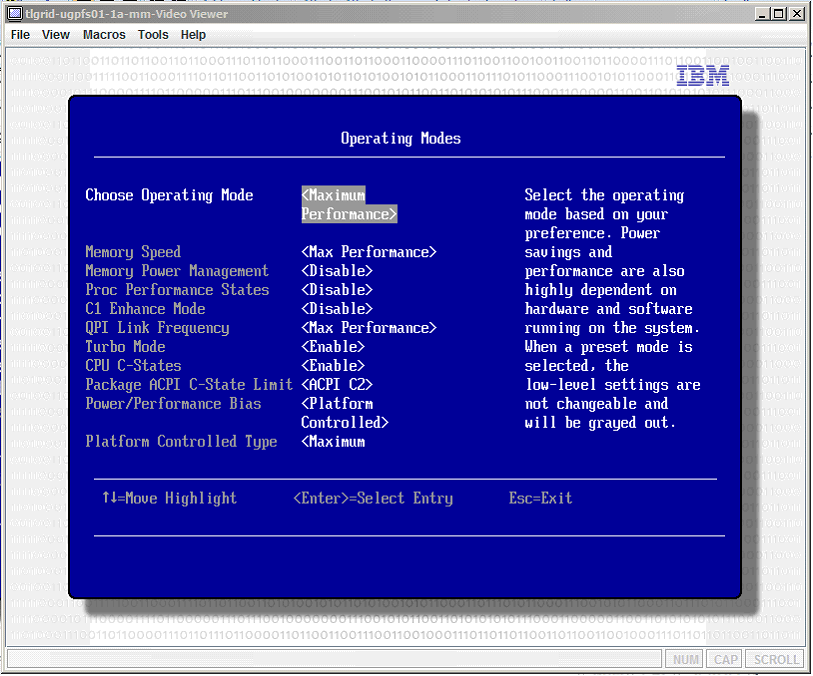
Hi, Try enabling the following in the BIOS of the NSD servers (screen shots below) Turbo Mode - Enable QPI Link Frequency - Max Performance Operating Mode - Maximum Performance
While we have even better performance with sequential reads on raw storage LUNS, using GPFS we can only reach 1GB/s in total (each nsd server seems limited by 0,5GB/s) independent of the number of clients We are testing from 2 testing machines connected to the nsds with infiniband, verbs enabled.
Also, It will be good to verify that all the GPFS nodes have Verbs RDMA started using "mmfsadm test verbs status" and that the NSD client-server communication from client to server during "dd" is actually using Verbs RDMA using "mmfsadm test verbs conn" command (on NSD client doing dd). If not, then GPFS might be using TCP/IP network over which the cluster is configured impacting performance (If this is the case, GPFS mmfs.log.latest for any Verbs RDMA related errors and resolve). Regards, -Kums From: "Knister, Aaron S. (GSFC-606.2)[COMPUTER SCIENCE CORP]" <aaron.s.knister@nasa.gov> To: gpfsug main discussion list <gpfsug-discuss@spectrumscale.org> Date: 04/21/2017 09:11 AM Subject: Re: [gpfsug-discuss] bizarre performance behavior Sent by: gpfsug-discuss-bounces@spectrumscale.org Fantastic news! It might also be worth running "cpupower monitor" or "turbostat" on your NSD servers while you're running dd tests from the clients to see what CPU frequency your cores are actually running at. A typical NSD server workload (especially with IB verbs and for reads) can be pretty light on CPU which might not prompt your CPU crew governor to up the frequency (which can affect throughout). If your frequency scaling governor isn't kicking up the frequency of your CPUs I've seen that cause this behavior in my testing. -Aaron On April 21, 2017 at 05:43:40 EDT, Kenneth Waegeman <kenneth.waegeman@ugent.be> wrote: Hi, We are running a test setup with 2 NSD Servers backed by 4 Dell Powervaults MD3460s. nsd00 is primary serving LUNS of controller A of the 4 powervaults, nsd02 is primary serving LUNS of controller B. We are testing from 2 testing machines connected to the nsds with infiniband, verbs enabled. When we do dd from the NSD servers, we see indeed performance going to 5.8GB/s for one nsd, 7.2GB/s for the two! So it looks like GPFS is able to get the data at a decent speed. Since we can write from the clients at a good speed, I didn't suspect the communication between clients and nsds being the issue, especially since total performance stays the same using 1 or multiple clients. I'll use the nsdperf tool to see if we can find anything, thanks! K On 20/04/17 17:04, Knister, Aaron S. (GSFC-606.2)[COMPUTER SCIENCE CORP] wrote: Interesting. Could you share a little more about your architecture? Is it possible to mount the fs on an NSD server and do some dd's from the fs on the NSD server? If that gives you decent performance perhaps try NSDPERF next https://www.ibm.com/developerworks/community/wikis/home?lang=en#!/wiki/Gener... -Aaron On April 20, 2017 at 10:53:47 EDT, Kenneth Waegeman <kenneth.waegeman@ugent.be> wrote: Hi, Having an issue that looks the same as this one: We can do sequential writes to the filesystem at 7,8 GB/s total , which is the expected speed for our current storage backend. While we have even better performance with sequential reads on raw storage LUNS, using GPFS we can only reach 1GB/s in total (each nsd server seems limited by 0,5GB/s) independent of the number of clients (1,2,4,..) or ways we tested (fio,dd). We played with blockdev params, MaxMBps, PrefetchThreads, hyperthreading, c1e/cstates, .. as discussed in this thread, but nothing seems to impact this read performance. Any ideas? Thanks! Kenneth On 17/02/17 19:29, Jan-Frode Myklebust wrote: I just had a similar experience from a sandisk infiniflash system SAS-attached to s single host. Gpfsperf reported 3,2 Gbyte/s for writes. and 250-300 Mbyte/s on sequential reads!! Random reads were on the order of 2 Gbyte/s. After a bit head scratching snd fumbling around I found out that reducing maxMBpS from 10000 to 100 fixed the problem! Digging further I found that reducing prefetchThreads from default=72 to 32 also fixed it, while leaving maxMBpS at 10000. Can now also read at 3,2 GByte/s. Could something like this be the problem on your box as well? -jf fre. 17. feb. 2017 kl. 18.13 skrev Aaron Knister <aaron.s.knister@nasa.gov
: Well, I'm somewhat scrounging for hardware. This is in our test environment :) And yep, it's got the 2U gpu-tray in it although even without the riser it has 2 PCIe slots onboard (excluding the on-board dual-port mezz card) so I think it would make a fine NSD server even without the riser.
-Aaron On 2/17/17 11:43 AM, Simon Thompson (Research Computing - IT Services) wrote:
Maybe its related to interrupt handlers somehow? You drive the load up on one socket, you push all the interrupt handling to the other socket where the fabric card is attached?
Dunno ... (Though I am intrigued you use idataplex nodes as NSD servers, I assume its some 2U gpu-tray riser one or something !)
Simon ________________________________________ From: gpfsug-discuss-bounces@spectrumscale.org [ gpfsug-discuss-bounces@spectrumscale.org] on behalf of Aaron Knister [ aaron.s.knister@nasa.gov] Sent: 17 February 2017 15:52 To: gpfsug main discussion list Subject: [gpfsug-discuss] bizarre performance behavior
This is a good one. I've got an NSD server with 4x 16GB fibre connections coming in and 1x FDR10 and 1x QDR connection going out to the clients. I was having a really hard time getting anything resembling sensible performance out of it (4-5Gb/s writes but maybe 1.2Gb/s for reads). The back-end is a DDN SFA12K and I *know* it can do better than that.
I don't remember quite how I figured this out but simply by running "openssl speed -multi 16" on the nsd server to drive up the load I saw an almost 4x performance jump which is pretty much goes against every sysadmin fiber in me (i.e. "drive up the cpu load with unrelated crap to quadruple your i/o performance").
This feels like some type of C-states frequency scaling shenanigans that I haven't quite ironed down yet. I booted the box with the following kernel parameters "intel_idle.max_cstate=0 processor.max_cstate=0" which didn't seem to make much of a difference. I also tried setting the frequency governer to userspace and setting the minimum frequency to 2.6ghz (it's a 2.6ghz cpu). None of that really matters-- I still have to run something to drive up the CPU load and then performance improves.
I'm wondering if this could be an issue with the C1E state? I'm curious if anyone has seen anything like this. The node is a dx360 M4 (Sandybridge) with 16 2.6GHz cores and 32GB of RAM.
-Aaron
-- Aaron Knister NASA Center for Climate Simulation (Code 606.2) Goddard Space Flight Center (301) 286-2776 _______________________________________________ gpfsug-discuss mailing list gpfsug-discuss at spectrumscale.org http://gpfsug.org/mailman/listinfo/gpfsug-discuss _______________________________________________ gpfsug-discuss mailing list gpfsug-discuss at spectrumscale.org http://gpfsug.org/mailman/listinfo/gpfsug-discuss
-- Aaron Knister NASA Center for Climate Simulation (Code 606.2) Goddard Space Flight Center (301) 286-2776 _______________________________________________ gpfsug-discuss mailing list gpfsug-discuss at spectrumscale.org http://gpfsug.org/mailman/listinfo/gpfsug-discuss _______________________________________________ gpfsug-discuss mailing list gpfsug-discuss at spectrumscale.org http://gpfsug.org/mailman/listinfo/gpfsug-discuss _______________________________________________ gpfsug-discuss mailing list gpfsug-discuss at spectrumscale.org http://gpfsug.org/mailman/listinfo/gpfsug-discuss _______________________________________________ gpfsug-discuss mailing list gpfsug-discuss at spectrumscale.org http://gpfsug.org/mailman/listinfo/gpfsug-discuss
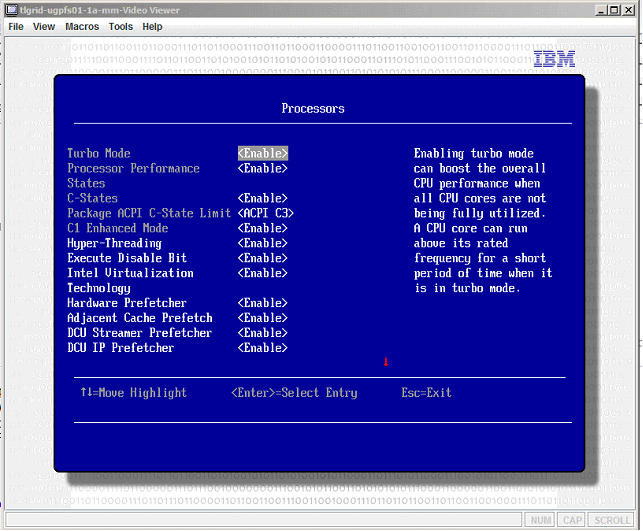
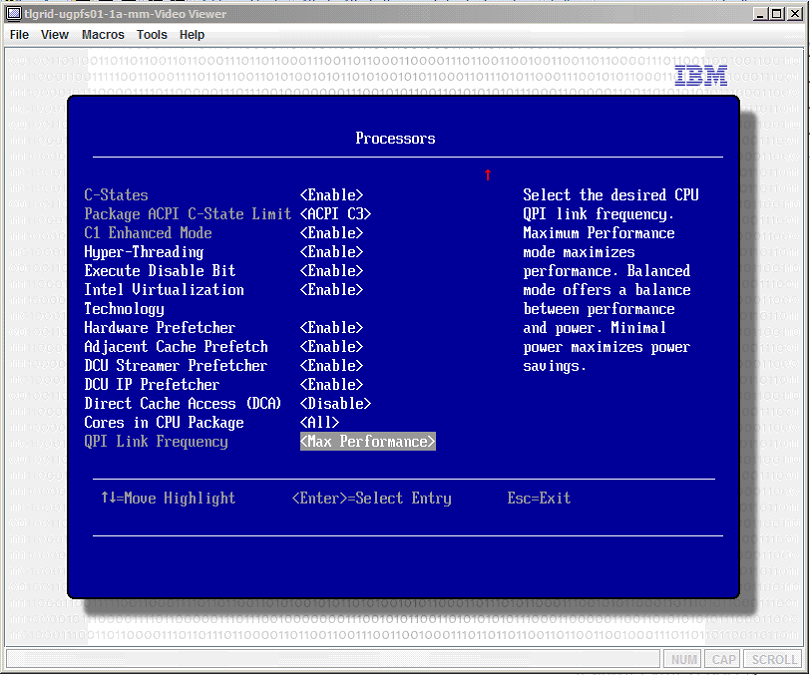
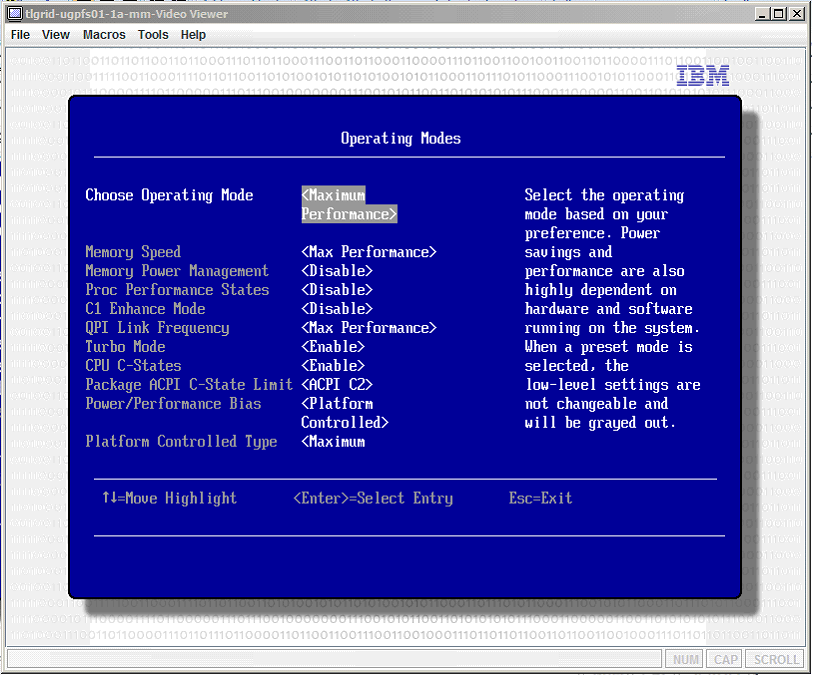

I think we have a new topic and new speaker for the next UG meeting at SC! Kums presenting "Performance considerations for Spectrum Scale"!! Kums, I have to say you do have a lot to offer here... ;o) -Bryan Disclaimer: There are some selfish reasons of me wanting to hang out with you again involved in this suggestion From: gpfsug-discuss-bounces@spectrumscale.org [mailto:gpfsug-discuss-bounces@spectrumscale.org] On Behalf Of Kumaran Rajaram Sent: Friday, April 21, 2017 9:02 AM To: gpfsug main discussion list <gpfsug-discuss@spectrumscale.org> Subject: Re: [gpfsug-discuss] bizarre performance behavior Hi, Try enabling the following in the BIOS of the NSD servers (screen shots below) * Turbo Mode - Enable * QPI Link Frequency - Max Performance * Operating Mode - Maximum Performance * >>>>While we have even better performance with sequential reads on raw storage LUNS, using GPFS we can only reach 1GB/s in total (each nsd server seems limited by 0,5GB/s) independent of the number of clients
We are testing from 2 testing machines connected to the nsds with infiniband, verbs enabled.
Also, It will be good to verify that all the GPFS nodes have Verbs RDMA started using "mmfsadm test verbs status" and that the NSD client-server communication from client to server during "dd" is actually using Verbs RDMA using "mmfsadm test verbs conn" command (on NSD client doing dd). If not, then GPFS might be using TCP/IP network over which the cluster is configured impacting performance (If this is the case, GPFS mmfs.log.latest for any Verbs RDMA related errors and resolve). * [cid:image001.gif@01D2BA86.4D4B4C10] [cid:image002.gif@01D2BA86.4D4B4C10] [cid:image003.gif@01D2BA86.4D4B4C10] Regards, -Kums From: "Knister, Aaron S. (GSFC-606.2)[COMPUTER SCIENCE CORP]" <aaron.s.knister@nasa.gov<mailto:aaron.s.knister@nasa.gov>> To: gpfsug main discussion list <gpfsug-discuss@spectrumscale.org<mailto:gpfsug-discuss@spectrumscale.org>> Date: 04/21/2017 09:11 AM Subject: Re: [gpfsug-discuss] bizarre performance behavior Sent by: gpfsug-discuss-bounces@spectrumscale.org<mailto:gpfsug-discuss-bounces@spectrumscale.org> ________________________________ Fantastic news! It might also be worth running "cpupower monitor" or "turbostat" on your NSD servers while you're running dd tests from the clients to see what CPU frequency your cores are actually running at. A typical NSD server workload (especially with IB verbs and for reads) can be pretty light on CPU which might not prompt your CPU crew governor to up the frequency (which can affect throughout). If your frequency scaling governor isn't kicking up the frequency of your CPUs I've seen that cause this behavior in my testing. -Aaron On April 21, 2017 at 05:43:40 EDT, Kenneth Waegeman <kenneth.waegeman@ugent.be<mailto:kenneth.waegeman@ugent.be>> wrote: Hi, We are running a test setup with 2 NSD Servers backed by 4 Dell Powervaults MD3460s. nsd00 is primary serving LUNS of controller A of the 4 powervaults, nsd02 is primary serving LUNS of controller B. We are testing from 2 testing machines connected to the nsds with infiniband, verbs enabled. When we do dd from the NSD servers, we see indeed performance going to 5.8GB/s for one nsd, 7.2GB/s for the two! So it looks like GPFS is able to get the data at a decent speed. Since we can write from the clients at a good speed, I didn't suspect the communication between clients and nsds being the issue, especially since total performance stays the same using 1 or multiple clients. I'll use the nsdperf tool to see if we can find anything, thanks! K On 20/04/17 17:04, Knister, Aaron S. (GSFC-606.2)[COMPUTER SCIENCE CORP] wrote: Interesting. Could you share a little more about your architecture? Is it possible to mount the fs on an NSD server and do some dd's from the fs on the NSD server? If that gives you decent performance perhaps try NSDPERF next https://www.ibm.com/developerworks/community/wikis/home?lang=en#!/wiki/Gener... -Aaron On April 20, 2017 at 10:53:47 EDT, Kenneth Waegeman <kenneth.waegeman@ugent.be><mailto:kenneth.waegeman@ugent.be>wrote: Hi, Having an issue that looks the same as this one: We can do sequential writes to the filesystem at 7,8 GB/s total , which is the expected speed for our current storage backend. While we have even better performance with sequential reads on raw storage LUNS, using GPFS we can only reach 1GB/s in total (each nsd server seems limited by 0,5GB/s) independent of the number of clients (1,2,4,..) or ways we tested (fio,dd). We played with blockdev params, MaxMBps, PrefetchThreads, hyperthreading, c1e/cstates, .. as discussed in this thread, but nothing seems to impact this read performance. Any ideas? Thanks! Kenneth On 17/02/17 19:29, Jan-Frode Myklebust wrote: I just had a similar experience from a sandisk infiniflash system SAS-attached to s single host. Gpfsperf reported 3,2 Gbyte/s for writes. and 250-300 Mbyte/s on sequential reads!! Random reads were on the order of 2 Gbyte/s. After a bit head scratching snd fumbling around I found out that reducing maxMBpS from 10000 to 100 fixed the problem! Digging further I found that reducing prefetchThreads from default=72 to 32 also fixed it, while leaving maxMBpS at 10000. Can now also read at 3,2 GByte/s. Could something like this be the problem on your box as well? -jf fre. 17. feb. 2017 kl. 18.13 skrev Aaron Knister <aaron.s.knister@nasa.gov<mailto:aaron.s.knister@nasa.gov>>: Well, I'm somewhat scrounging for hardware. This is in our test environment :) And yep, it's got the 2U gpu-tray in it although even without the riser it has 2 PCIe slots onboard (excluding the on-board dual-port mezz card) so I think it would make a fine NSD server even without the riser. -Aaron On 2/17/17 11:43 AM, Simon Thompson (Research Computing - IT Services) wrote:
Maybe its related to interrupt handlers somehow? You drive the load up on one socket, you push all the interrupt handling to the other socket where the fabric card is attached?
Dunno ... (Though I am intrigued you use idataplex nodes as NSD servers, I assume its some 2U gpu-tray riser one or something !)
Simon ________________________________________ From: gpfsug-discuss-bounces@spectrumscale.org<mailto:gpfsug-discuss-bounces@spectrumscale.org>[gpfsug-discuss-bounces@spectrumscale.org<mailto:gpfsug-discuss-bounces@spectrumscale.org>] on behalf of Aaron Knister [aaron.s.knister@nasa.gov<mailto:aaron.s.knister@nasa.gov>] Sent: 17 February 2017 15:52 To: gpfsug main discussion list Subject: [gpfsug-discuss] bizarre performance behavior
This is a good one. I've got an NSD server with 4x 16GB fibre connections coming in and 1x FDR10 and 1x QDR connection going out to the clients. I was having a really hard time getting anything resembling sensible performance out of it (4-5Gb/s writes but maybe 1.2Gb/s for reads). The back-end is a DDN SFA12K and I *know* it can do better than that.
I don't remember quite how I figured this out but simply by running "openssl speed -multi 16" on the nsd server to drive up the load I saw an almost 4x performance jump which is pretty much goes against every sysadmin fiber in me (i.e. "drive up the cpu load with unrelated crap to quadruple your i/o performance").
This feels like some type of C-states frequency scaling shenanigans that I haven't quite ironed down yet. I booted the box with the following kernel parameters "intel_idle.max_cstate=0 processor.max_cstate=0" which didn't seem to make much of a difference. I also tried setting the frequency governer to userspace and setting the minimum frequency to 2.6ghz (it's a 2.6ghz cpu). None of that really matters-- I still have to run something to drive up the CPU load and then performance improves.
I'm wondering if this could be an issue with the C1E state? I'm curious if anyone has seen anything like this. The node is a dx360 M4 (Sandybridge) with 16 2.6GHz cores and 32GB of RAM.
-Aaron
-- Aaron Knister NASA Center for Climate Simulation (Code 606.2) Goddard Space Flight Center (301) 286-2776 _______________________________________________ gpfsug-discuss mailing list gpfsug-discuss at spectrumscale.org<http://spectrumscale.org/> http://gpfsug.org/mailman/listinfo/gpfsug-discuss _______________________________________________ gpfsug-discuss mailing list gpfsug-discuss at spectrumscale.org<http://spectrumscale.org/> http://gpfsug.org/mailman/listinfo/gpfsug-discuss
-- Aaron Knister NASA Center for Climate Simulation (Code 606.2) Goddard Space Flight Center (301) 286-2776 _______________________________________________ gpfsug-discuss mailing list gpfsug-discuss at spectrumscale.org<http://spectrumscale.org/> http://gpfsug.org/mailman/listinfo/gpfsug-discuss _______________________________________________ gpfsug-discuss mailing list gpfsug-discuss at spectrumscale.org http://gpfsug.org/mailman/listinfo/gpfsug-discuss _______________________________________________ gpfsug-discuss mailing list gpfsug-discuss at spectrumscale.org http://gpfsug.org/mailman/listinfo/gpfsug-discuss _______________________________________________ gpfsug-discuss mailing list gpfsug-discuss at spectrumscale.org http://gpfsug.org/mailman/listinfo/gpfsug-discuss ________________________________ Note: This email is for the confidential use of the named addressee(s) only and may contain proprietary, confidential or privileged information. If you are not the intended recipient, you are hereby notified that any review, dissemination or copying of this email is strictly prohibited, and to please notify the sender immediately and destroy this email and any attachments. Email transmission cannot be guaranteed to be secure or error-free. The Company, therefore, does not make any guarantees as to the completeness or accuracy of this email or any attachments. This email is for informational purposes only and does not constitute a recommendation, offer, request or solicitation of any kind to buy, sell, subscribe, redeem or perform any type of transaction of a financial product.
Hi, We already verified this on our nsds: [root@nsd00 ~]# /opt/dell/toolkit/bin/syscfg --QpiSpeed QpiSpeed=maxdatarate [root@nsd00 ~]# /opt/dell/toolkit/bin/syscfg --turbomode turbomode=enable [root@nsd00 ~]# /opt/dell/toolkit/bin/syscfg –-SysProfile SysProfile=perfoptimized so sadly this is not the issue. Also the output of the verbs commands look ok, there are connections from the client to the nsds are there is data being read and writen. Thanks again! Kenneth On 21/04/17 16:01, Kumaran Rajaram wrote:
Hi,
Try enabling the following in the BIOS of the NSD servers (screen shots below)
* Turbo Mode - Enable * QPI Link Frequency - Max Performance * Operating Mode - Maximum Performance *
>>>>While we have even better performance with sequential reads on raw storage LUNS, using GPFS we can only reach 1GB/s in total (each nsd server seems limited by 0,5GB/s) independent of the number of clients
>>We are testing from 2 testing machines connected to the nsds with infiniband, verbs enabled.
Also, It will be good to verify that all the GPFS nodes have Verbs RDMA started using "mmfsadm test verbs status" and that the NSD client-server communication from client to server during "dd" is actually using Verbs RDMA using "mmfsadm test verbs conn" command (on NSD client doing dd). If not, then GPFS might be using TCP/IP network over which the cluster is configured impacting performance (If this is the case, GPFS mmfs.log.latest for any Verbs RDMA related errors and resolve).
*
Regards, -Kums
From: "Knister, Aaron S. (GSFC-606.2)[COMPUTER SCIENCE CORP]" <aaron.s.knister@nasa.gov> To: gpfsug main discussion list <gpfsug-discuss@spectrumscale.org> Date: 04/21/2017 09:11 AM Subject: Re: [gpfsug-discuss] bizarre performance behavior Sent by: gpfsug-discuss-bounces@spectrumscale.org ------------------------------------------------------------------------
Fantastic news! It might also be worth running "cpupower monitor" or "turbostat" on your NSD servers while you're running dd tests from the clients to see what CPU frequency your cores are actually running at.
A typical NSD server workload (especially with IB verbs and for reads) can be pretty light on CPU which might not prompt your CPU crew governor to up the frequency (which can affect throughout). If your frequency scaling governor isn't kicking up the frequency of your CPUs I've seen that cause this behavior in my testing.
-Aaron
On April 21, 2017 at 05:43:40 EDT, Kenneth Waegeman <kenneth.waegeman@ugent.be> wrote:
Hi,
We are running a test setup with 2 NSD Servers backed by 4 Dell Powervaults MD3460s. nsd00 is primary serving LUNS of controller A of the 4 powervaults, nsd02 is primary serving LUNS of controller B.
We are testing from 2 testing machines connected to the nsds with infiniband, verbs enabled.
When we do dd from the NSD servers, we see indeed performance going to 5.8GB/s for one nsd, 7.2GB/s for the two! So it looks like GPFS is able to get the data at a decent speed. Since we can write from the clients at a good speed, I didn't suspect the communication between clients and nsds being the issue, especially since total performance stays the same using 1 or multiple clients.
I'll use the nsdperf tool to see if we can find anything,
thanks!
K
On 20/04/17 17:04, Knister, Aaron S. (GSFC-606.2)[COMPUTER SCIENCE CORP] wrote: Interesting. Could you share a little more about your architecture? Is it possible to mount the fs on an NSD server and do some dd's from the fs on the NSD server? If that gives you decent performance perhaps try NSDPERF next _https://www.ibm.com/developerworks/community/wikis/home?lang=en#!/wiki/Gener... <https://www.ibm.com/developerworks/community/wikis/home?lang=en#%21/wiki/Gen...>
-Aaron
On April 20, 2017 at 10:53:47 EDT, Kenneth Waegeman _<kenneth.waegeman@ugent.be>_ <mailto:kenneth.waegeman@ugent.be>wrote:
Hi,
Having an issue that looks the same as this one:
We can do sequential writes to the filesystem at 7,8 GB/s total , which is the expected speed for our current storage backend. While we have even better performance with sequential reads on raw storage LUNS, using GPFS we can only reach 1GB/s in total (each nsd server seems limited by 0,5GB/s) independent of the number of clients (1,2,4,..) or ways we tested (fio,dd). We played with blockdev params, MaxMBps, PrefetchThreads, hyperthreading, c1e/cstates, .. as discussed in this thread, but nothing seems to impact this read performance.
Any ideas?
Thanks!
Kenneth
On 17/02/17 19:29, Jan-Frode Myklebust wrote: I just had a similar experience from a sandisk infiniflash system SAS-attached to s single host. Gpfsperf reported 3,2 Gbyte/s for writes. and 250-300 Mbyte/s on sequential reads!! Random reads were on the order of 2 Gbyte/s.
After a bit head scratching snd fumbling around I found out that reducing maxMBpS from 10000 to 100 fixed the problem! Digging further I found that reducing prefetchThreads from default=72 to 32 also fixed it, while leaving maxMBpS at 10000. Can now also read at 3,2 GByte/s.
Could something like this be the problem on your box as well?
-jf fre. 17. feb. 2017 kl. 18.13 skrev Aaron Knister <_aaron.s.knister@nasa.gov_ <mailto:aaron.s.knister@nasa.gov>>: Well, I'm somewhat scrounging for hardware. This is in our test environment :) And yep, it's got the 2U gpu-tray in it although even without the riser it has 2 PCIe slots onboard (excluding the on-board dual-port mezz card) so I think it would make a fine NSD server even without the riser.
-Aaron
On 2/17/17 11:43 AM, Simon Thompson (Research Computing - IT Services) wrote:
Maybe its related to interrupt handlers somehow? You drive the load up on one socket, you push all the interrupt handling to the other socket where the fabric card is attached?
Dunno ... (Though I am intrigued you use idataplex nodes as NSD servers, I assume its some 2U gpu-tray riser one or something !)
Simon ________________________________________ From: _gpfsug-discuss-bounces@spectrumscale.org_ <mailto:gpfsug-discuss-bounces@spectrumscale.org>[_gpfsug-discuss-bounces@spectrumscale.org_ <mailto:gpfsug-discuss-bounces@spectrumscale.org>] on behalf of Aaron Knister [_aaron.s.knister@nasa.gov_ <mailto:aaron.s.knister@nasa.gov>] Sent: 17 February 2017 15:52 To: gpfsug main discussion list Subject: [gpfsug-discuss] bizarre performance behavior
This is a good one. I've got an NSD server with 4x 16GB fibre connections coming in and 1x FDR10 and 1x QDR connection going out to the clients. I was having a really hard time getting anything resembling sensible performance out of it (4-5Gb/s writes but maybe 1.2Gb/s for reads). The back-end is a DDN SFA12K and I *know* it can do better than that.
I don't remember quite how I figured this out but simply by running "openssl speed -multi 16" on the nsd server to drive up the load I saw an almost 4x performance jump which is pretty much goes against every sysadmin fiber in me (i.e. "drive up the cpu load with unrelated crap to quadruple your i/o performance").
This feels like some type of C-states frequency scaling shenanigans that I haven't quite ironed down yet. I booted the box with the following kernel parameters "intel_idle.max_cstate=0 processor.max_cstate=0" which didn't seem to make much of a difference. I also tried setting the frequency governer to userspace and setting the minimum frequency to 2.6ghz (it's a 2.6ghz cpu). None of that really matters-- I still have to run something to drive up the CPU load and then performance improves.
I'm wondering if this could be an issue with the C1E state? I'm curious if anyone has seen anything like this. The node is a dx360 M4 (Sandybridge) with 16 2.6GHz cores and 32GB of RAM.
-Aaron
-- Aaron Knister NASA Center for Climate Simulation (Code 606.2) Goddard Space Flight Center (301) 286-2776 _______________________________________________ gpfsug-discuss mailing list gpfsug-discuss at _spectrumscale.org_ <http://spectrumscale.org/> _http://gpfsug.org/mailman/listinfo/gpfsug-discuss_ _______________________________________________ gpfsug-discuss mailing list gpfsug-discuss at _spectrumscale.org_ <http://spectrumscale.org/> _http://gpfsug.org/mailman/listinfo/gpfsug-discuss_
-- Aaron Knister NASA Center for Climate Simulation (Code 606.2) Goddard Space Flight Center (301) 286-2776 _______________________________________________ gpfsug-discuss mailing list gpfsug-discuss at _spectrumscale.org_ <http://spectrumscale.org/>_ __http://gpfsug.org/mailman/listinfo/gpfsug-discuss_
_______________________________________________ gpfsug-discuss mailing list gpfsug-discuss at spectrumscale.org _http://gpfsug.org/mailman/listinfo/gpfsug-discuss_
_______________________________________________ gpfsug-discuss mailing list gpfsug-discuss at spectrumscale.org _http://gpfsug.org/mailman/listinfo/gpfsug-discuss_
_______________________________________________ gpfsug-discuss mailing list gpfsug-discuss at spectrumscale.org http://gpfsug.org/mailman/listinfo/gpfsug-discuss
_______________________________________________ gpfsug-discuss mailing list gpfsug-discuss at spectrumscale.org http://gpfsug.org/mailman/listinfo/gpfsug-discuss
Hi Kenneth, As it was mentioned earlier, it will be good to first verify the raw network performance between the NSD client and NSD server using the nsdperf tool that is built with RDMA support. g++ -O2 -DRDMA -o nsdperf -lpthread -lrt -libverbs -lrdmacm nsdperf.C In addition, since you have 2 x NSD servers it will be good to perform NSD client file-system performance test with just single NSD server (mmshutdown the other server, assuming all the NSDs have primary, server NSD server configured + Quorum will be intact when a NSD server is brought down) to see if it helps to improve the read performance + if there are variations in the file-system read bandwidth results between NSD_server#1 'active' vs. NSD_server #2 'active' (with other NSD server in GPFS "down" state). If there is significant variation, it can help to isolate the issue to particular NSD server (HW or IB issue?). You can issue "mmdiag --waiters" on NSD client as well as NSD servers during your dd test, to verify if there are unsual long GPFS waiters. In addition, you may issue Linux "perf top -z" command on the GPFS node to see if there is high CPU usage by any particular call/event (for e.g., If GPFS config parameter verbsRdmaMaxSendBytes has been set to low value from the default 16M, then it can cause RDMA completion threads to go CPU bound ). Please verify some performance scenarios detailed in Chapter 22 in Spectrum Scale Problem Determination Guide (link below). https://www.ibm.com/support/knowledgecenter/en/STXKQY_4.2.3/com.ibm.spectrum... Thanks, -Kums From: Kenneth Waegeman <kenneth.waegeman@ugent.be> To: gpfsug main discussion list <gpfsug-discuss@spectrumscale.org> Date: 04/21/2017 11:43 AM Subject: Re: [gpfsug-discuss] bizarre performance behavior Sent by: gpfsug-discuss-bounces@spectrumscale.org Hi, We already verified this on our nsds: [root@nsd00 ~]# /opt/dell/toolkit/bin/syscfg --QpiSpeed QpiSpeed=maxdatarate [root@nsd00 ~]# /opt/dell/toolkit/bin/syscfg --turbomode turbomode=enable [root@nsd00 ~]# /opt/dell/toolkit/bin/syscfg –-SysProfile SysProfile=perfoptimized so sadly this is not the issue. Also the output of the verbs commands look ok, there are connections from the client to the nsds are there is data being read and writen. Thanks again! Kenneth On 21/04/17 16:01, Kumaran Rajaram wrote: Hi, Try enabling the following in the BIOS of the NSD servers (screen shots below) Turbo Mode - Enable QPI Link Frequency - Max Performance Operating Mode - Maximum Performance
While we have even better performance with sequential reads on raw storage LUNS, using GPFS we can only reach 1GB/s in total (each nsd server seems limited by 0,5GB/s) independent of the number of clients We are testing from 2 testing machines connected to the nsds with infiniband, verbs enabled.
Also, It will be good to verify that all the GPFS nodes have Verbs RDMA started using "mmfsadm test verbs status" and that the NSD client-server communication from client to server during "dd" is actually using Verbs RDMA using "mmfsadm test verbs conn" command (on NSD client doing dd). If not, then GPFS might be using TCP/IP network over which the cluster is configured impacting performance (If this is the case, GPFS mmfs.log.latest for any Verbs RDMA related errors and resolve). Regards, -Kums From: "Knister, Aaron S. (GSFC-606.2)[COMPUTER SCIENCE CORP]" <aaron.s.knister@nasa.gov> To: gpfsug main discussion list <gpfsug-discuss@spectrumscale.org> Date: 04/21/2017 09:11 AM Subject: Re: [gpfsug-discuss] bizarre performance behavior Sent by: gpfsug-discuss-bounces@spectrumscale.org Fantastic news! It might also be worth running "cpupower monitor" or "turbostat" on your NSD servers while you're running dd tests from the clients to see what CPU frequency your cores are actually running at. A typical NSD server workload (especially with IB verbs and for reads) can be pretty light on CPU which might not prompt your CPU crew governor to up the frequency (which can affect throughout). If your frequency scaling governor isn't kicking up the frequency of your CPUs I've seen that cause this behavior in my testing. -Aaron On April 21, 2017 at 05:43:40 EDT, Kenneth Waegeman <kenneth.waegeman@ugent.be> wrote: Hi, We are running a test setup with 2 NSD Servers backed by 4 Dell Powervaults MD3460s. nsd00 is primary serving LUNS of controller A of the 4 powervaults, nsd02 is primary serving LUNS of controller B. We are testing from 2 testing machines connected to the nsds with infiniband, verbs enabled. When we do dd from the NSD servers, we see indeed performance going to 5.8GB/s for one nsd, 7.2GB/s for the two! So it looks like GPFS is able to get the data at a decent speed. Since we can write from the clients at a good speed, I didn't suspect the communication between clients and nsds being the issue, especially since total performance stays the same using 1 or multiple clients. I'll use the nsdperf tool to see if we can find anything, thanks! K On 20/04/17 17:04, Knister, Aaron S. (GSFC-606.2)[COMPUTER SCIENCE CORP] wrote: Interesting. Could you share a little more about your architecture? Is it possible to mount the fs on an NSD server and do some dd's from the fs on the NSD server? If that gives you decent performance perhaps try NSDPERF next https://www.ibm.com/developerworks/community/wikis/home?lang=en#!/wiki/Gener... -Aaron On April 20, 2017 at 10:53:47 EDT, Kenneth Waegeman <kenneth.waegeman@ugent.be>wrote: Hi, Having an issue that looks the same as this one: We can do sequential writes to the filesystem at 7,8 GB/s total , which is the expected speed for our current storage backend. While we have even better performance with sequential reads on raw storage LUNS, using GPFS we can only reach 1GB/s in total (each nsd server seems limited by 0,5GB/s) independent of the number of clients (1,2,4,..) or ways we tested (fio,dd). We played with blockdev params, MaxMBps, PrefetchThreads, hyperthreading, c1e/cstates, .. as discussed in this thread, but nothing seems to impact this read performance. Any ideas? Thanks! Kenneth On 17/02/17 19:29, Jan-Frode Myklebust wrote: I just had a similar experience from a sandisk infiniflash system SAS-attached to s single host. Gpfsperf reported 3,2 Gbyte/s for writes. and 250-300 Mbyte/s on sequential reads!! Random reads were on the order of 2 Gbyte/s. After a bit head scratching snd fumbling around I found out that reducing maxMBpS from 10000 to 100 fixed the problem! Digging further I found that reducing prefetchThreads from default=72 to 32 also fixed it, while leaving maxMBpS at 10000. Can now also read at 3,2 GByte/s. Could something like this be the problem on your box as well? -jf fre. 17. feb. 2017 kl. 18.13 skrev Aaron Knister <aaron.s.knister@nasa.gov
: Well, I'm somewhat scrounging for hardware. This is in our test environment :) And yep, it's got the 2U gpu-tray in it although even without the riser it has 2 PCIe slots onboard (excluding the on-board dual-port mezz card) so I think it would make a fine NSD server even without the riser.
-Aaron On 2/17/17 11:43 AM, Simon Thompson (Research Computing - IT Services) wrote:
Maybe its related to interrupt handlers somehow? You drive the load up on one socket, you push all the interrupt handling to the other socket where the fabric card is attached?
Dunno ... (Though I am intrigued you use idataplex nodes as NSD servers, I assume its some 2U gpu-tray riser one or something !)
Simon ________________________________________ From: gpfsug-discuss-bounces@spectrumscale.org[ gpfsug-discuss-bounces@spectrumscale.org] on behalf of Aaron Knister [ aaron.s.knister@nasa.gov] Sent: 17 February 2017 15:52 To: gpfsug main discussion list Subject: [gpfsug-discuss] bizarre performance behavior
This is a good one. I've got an NSD server with 4x 16GB fibre connections coming in and 1x FDR10 and 1x QDR connection going out to the clients. I was having a really hard time getting anything resembling sensible performance out of it (4-5Gb/s writes but maybe 1.2Gb/s for reads). The back-end is a DDN SFA12K and I *know* it can do better than that.
I don't remember quite how I figured this out but simply by running "openssl speed -multi 16" on the nsd server to drive up the load I saw an almost 4x performance jump which is pretty much goes against every sysadmin fiber in me (i.e. "drive up the cpu load with unrelated crap to quadruple your i/o performance").
This feels like some type of C-states frequency scaling shenanigans that I haven't quite ironed down yet. I booted the box with the following kernel parameters "intel_idle.max_cstate=0 processor.max_cstate=0" which didn't seem to make much of a difference. I also tried setting the frequency governer to userspace and setting the minimum frequency to 2.6ghz (it's a 2.6ghz cpu). None of that really matters-- I still have to run something to drive up the CPU load and then performance improves.
I'm wondering if this could be an issue with the C1E state? I'm curious if anyone has seen anything like this. The node is a dx360 M4 (Sandybridge) with 16 2.6GHz cores and 32GB of RAM.
-Aaron
-- Aaron Knister NASA Center for Climate Simulation (Code 606.2) Goddard Space Flight Center (301) 286-2776 _______________________________________________ gpfsug-discuss mailing list gpfsug-discuss at spectrumscale.org http://gpfsug.org/mailman/listinfo/gpfsug-discuss _______________________________________________ gpfsug-discuss mailing list gpfsug-discuss at spectrumscale.org http://gpfsug.org/mailman/listinfo/gpfsug-discuss
-- Aaron Knister NASA Center for Climate Simulation (Code 606.2) Goddard Space Flight Center (301) 286-2776 _______________________________________________ gpfsug-discuss mailing list gpfsug-discuss at spectrumscale.org http://gpfsug.org/mailman/listinfo/gpfsug-discuss _______________________________________________ gpfsug-discuss mailing list gpfsug-discuss at spectrumscale.org http://gpfsug.org/mailman/listinfo/gpfsug-discuss _______________________________________________ gpfsug-discuss mailing list gpfsug-discuss at spectrumscale.org http://gpfsug.org/mailman/listinfo/gpfsug-discuss _______________________________________________ gpfsug-discuss mailing list gpfsug-discuss at spectrumscale.org http://gpfsug.org/mailman/listinfo/gpfsug-discuss _______________________________________________ gpfsug-discuss mailing list gpfsug-discuss at spectrumscale.org http://gpfsug.org/mailman/listinfo/gpfsug-discuss _______________________________________________ gpfsug-discuss mailing list gpfsug-discuss at spectrumscale.org http://gpfsug.org/mailman/listinfo/gpfsug-discuss
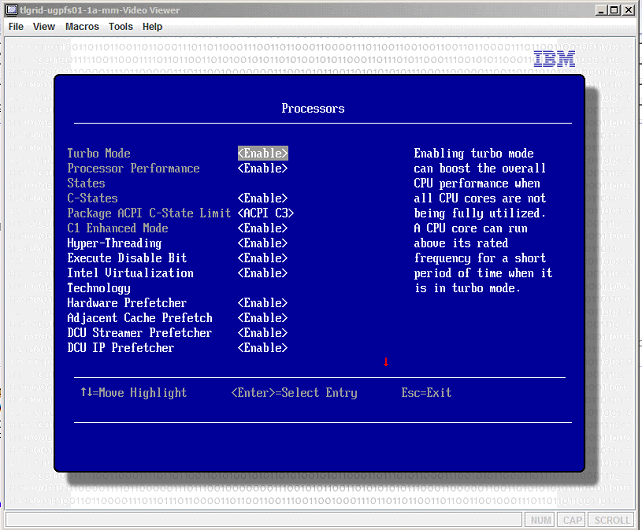
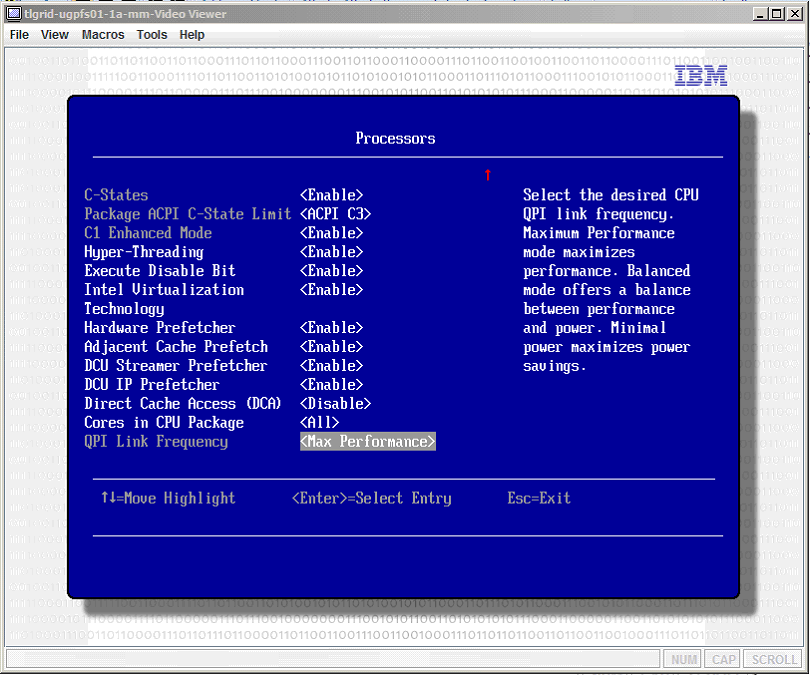
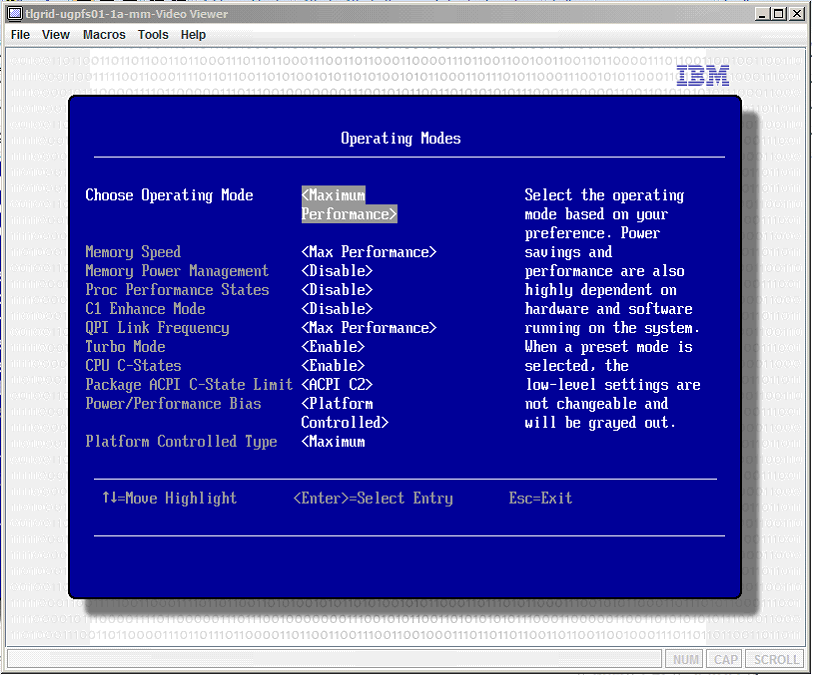
Hi, We found out using ib_read_bw and ib_write_bw that there were some links between server and clients degraded, having a bandwith of 350MB/s strangely, nsdperf did not report the same. It reported 12GB/s write and 9GB/s read, which was much more then we actually could achieve. So the problem was some bad ib routing. We changed some ib links, and then we got also 12GB/s read with nsdperf. On our clients we then are able to achieve the 7,2GB/s in total we also saw using the nsd servers! Many thanks for the help !! We are now running some tests with different blocksizes and parameters, because our backend storage is able to do more than the 7.2GB/s we get with GPFS (more like 14GB/s in total). I guess prefetchthreads and nsdworkerthreads are the ones to look at? Cheers! Kenneth On 21/04/17 22:27, Kumaran Rajaram wrote:
Hi Kenneth,
As it was mentioned earlier, it will be good to first verify the raw network performance between the NSD client and NSD server using the nsdperf tool that is built with RDMA support. g++ -O2 -DRDMA -o nsdperf -lpthread -lrt -libverbs -lrdmacm nsdperf.C
In addition, since you have 2 x NSD servers it will be good to perform NSD client file-system performance test with just single NSD server (mmshutdown the other server, assuming all the NSDs have primary, server NSD server configured + Quorum will be intact when a NSD server is brought down) to see if it helps to improve the read performance + if there are variations in the file-system read bandwidth results between NSD_server#1 'active' vs. NSD_server #2 'active' (with other NSD server in GPFS "down" state). If there is significant variation, it can help to isolate the issue to particular NSD server (HW or IB issue?).
You can issue "mmdiag --waiters" on NSD client as well as NSD servers during your dd test, to verify if there are unsual long GPFS waiters. In addition, you may issue Linux "perf top -z" command on the GPFS node to see if there is high CPU usage by any particular call/event (for e.g., If GPFS config parameter verbsRdmaMaxSendBytes has been set to low value from the default 16M, then it can cause RDMA completion threads to go CPU bound ). Please verify some performance scenarios detailed in Chapter 22 in Spectrum Scale Problem Determination Guide (link below).
https://www.ibm.com/support/knowledgecenter/en/STXKQY_4.2.3/com.ibm.spectrum...
Thanks, -Kums
From: Kenneth Waegeman <kenneth.waegeman@ugent.be> To: gpfsug main discussion list <gpfsug-discuss@spectrumscale.org> Date: 04/21/2017 11:43 AM Subject: Re: [gpfsug-discuss] bizarre performance behavior Sent by: gpfsug-discuss-bounces@spectrumscale.org ------------------------------------------------------------------------
Hi,
We already verified this on our nsds:
[root@nsd00 ~]# /opt/dell/toolkit/bin/syscfg --QpiSpeed QpiSpeed=maxdatarate [root@nsd00 ~]# /opt/dell/toolkit/bin/syscfg --turbomode turbomode=enable [root@nsd00 ~]# /opt/dell/toolkit/bin/syscfg –-SysProfile SysProfile=perfoptimized
so sadly this is not the issue.
Also the output of the verbs commands look ok, there are connections from the client to the nsds are there is data being read and writen.
Thanks again!
Kenneth
On 21/04/17 16:01, Kumaran Rajaram wrote: Hi,
Try enabling the following in the BIOS of the NSD servers (screen shots below)
* Turbo Mode - Enable * QPI Link Frequency - Max Performance * Operating Mode - Maximum Performance * >>>>While we have even better performance with sequential reads on raw storage LUNS, using GPFS we can only reach 1GB/s in total (each nsd server seems limited by 0,5GB/s) independent of the number of clients
>>We are testing from 2 testing machines connected to the nsds with infiniband, verbs enabled.
Also, It will be good to verify that all the GPFS nodes have Verbs RDMA started using "mmfsadm test verbs status" and that the NSD client-server communication from client to server during "dd" is actually using Verbs RDMA using "mmfsadm test verbs conn" command (on NSD client doing dd). If not, then GPFS might be using TCP/IP network over which the cluster is configured impacting performance (If this is the case, GPFS mmfs.log.latest for any Verbs RDMA related errors and resolve).
*
Regards, -Kums
From: "Knister, Aaron S. (GSFC-606.2)[COMPUTER SCIENCE CORP]" _<aaron.s.knister@nasa.gov>_ <mailto:aaron.s.knister@nasa.gov> To: gpfsug main discussion list _<gpfsug-discuss@spectrumscale.org>_ <mailto:gpfsug-discuss@spectrumscale.org> Date: 04/21/2017 09:11 AM Subject: Re: [gpfsug-discuss] bizarre performance behavior Sent by: _gpfsug-discuss-bounces@spectrumscale.org_ <mailto:gpfsug-discuss-bounces@spectrumscale.org> ------------------------------------------------------------------------
Fantastic news! It might also be worth running "cpupower monitor" or "turbostat" on your NSD servers while you're running dd tests from the clients to see what CPU frequency your cores are actually running at.
A typical NSD server workload (especially with IB verbs and for reads) can be pretty light on CPU which might not prompt your CPU crew governor to up the frequency (which can affect throughout). If your frequency scaling governor isn't kicking up the frequency of your CPUs I've seen that cause this behavior in my testing.
-Aaron
On April 21, 2017 at 05:43:40 EDT, Kenneth Waegeman _<kenneth.waegeman@ugent.be>_ <mailto:kenneth.waegeman@ugent.be>wrote:
Hi,
We are running a test setup with 2 NSD Servers backed by 4 Dell Powervaults MD3460s. nsd00 is primary serving LUNS of controller A of the 4 powervaults, nsd02 is primary serving LUNS of controller B.
We are testing from 2 testing machines connected to the nsds with infiniband, verbs enabled.
When we do dd from the NSD servers, we see indeed performance going to 5.8GB/s for one nsd, 7.2GB/s for the two! So it looks like GPFS is able to get the data at a decent speed. Since we can write from the clients at a good speed, I didn't suspect the communication between clients and nsds being the issue, especially since total performance stays the same using 1 or multiple clients.
I'll use the nsdperf tool to see if we can find anything,
thanks!
K
On 20/04/17 17:04, Knister, Aaron S. (GSFC-606.2)[COMPUTER SCIENCE CORP] wrote: Interesting. Could you share a little more about your architecture? Is it possible to mount the fs on an NSD server and do some dd's from the fs on the NSD server? If that gives you decent performance perhaps try NSDPERF next _https://www.ibm.com/developerworks/community/wikis/home?lang=en#!/wiki/Gener... <https://www.ibm.com/developerworks/community/wikis/home?lang=en#%21/wiki/Gen...>
-Aaron
On April 20, 2017 at 10:53:47 EDT, Kenneth Waegeman _<kenneth.waegeman@ugent.be>_ <mailto:kenneth.waegeman@ugent.be>wrote:
Hi,
Having an issue that looks the same as this one:
We can do sequential writes to the filesystem at 7,8 GB/s total , which is the expected speed for our current storage backend. While we have even better performance with sequential reads on raw storage LUNS, using GPFS we can only reach 1GB/s in total (each nsd server seems limited by 0,5GB/s) independent of the number of clients (1,2,4,..) or ways we tested (fio,dd). We played with blockdev params, MaxMBps, PrefetchThreads, hyperthreading, c1e/cstates, .. as discussed in this thread, but nothing seems to impact this read performance.
Any ideas?
Thanks!
Kenneth
On 17/02/17 19:29, Jan-Frode Myklebust wrote: I just had a similar experience from a sandisk infiniflash system SAS-attached to s single host. Gpfsperf reported 3,2 Gbyte/s for writes. and 250-300 Mbyte/s on sequential reads!! Random reads were on the order of 2 Gbyte/s.
After a bit head scratching snd fumbling around I found out that reducing maxMBpS from 10000 to 100 fixed the problem! Digging further I found that reducing prefetchThreads from default=72 to 32 also fixed it, while leaving maxMBpS at 10000. Can now also read at 3,2 GByte/s.
Could something like this be the problem on your box as well?
-jf fre. 17. feb. 2017 kl. 18.13 skrev Aaron Knister <_aaron.s.knister@nasa.gov_ <mailto:aaron.s.knister@nasa.gov>>: Well, I'm somewhat scrounging for hardware. This is in our test environment :) And yep, it's got the 2U gpu-tray in it although even without the riser it has 2 PCIe slots onboard (excluding the on-board dual-port mezz card) so I think it would make a fine NSD server even without the riser.
-Aaron
On 2/17/17 11:43 AM, Simon Thompson (Research Computing - IT Services) wrote:
Maybe its related to interrupt handlers somehow? You drive the load up on one socket, you push all the interrupt handling to the other socket where the fabric card is attached?
Dunno ... (Though I am intrigued you use idataplex nodes as NSD servers, I assume its some 2U gpu-tray riser one or something !)
Simon ________________________________________ From: _gpfsug-discuss-bounces@spectrumscale.org_ <mailto:gpfsug-discuss-bounces@spectrumscale.org>[_gpfsug-discuss-bounces@spectrumscale.org_ <mailto:gpfsug-discuss-bounces@spectrumscale.org>] on behalf of Aaron Knister [_aaron.s.knister@nasa.gov_ <mailto:aaron.s.knister@nasa.gov>] Sent: 17 February 2017 15:52 To: gpfsug main discussion list Subject: [gpfsug-discuss] bizarre performance behavior
This is a good one. I've got an NSD server with 4x 16GB fibre connections coming in and 1x FDR10 and 1x QDR connection going out to the clients. I was having a really hard time getting anything resembling sensible performance out of it (4-5Gb/s writes but maybe 1.2Gb/s for reads). The back-end is a DDN SFA12K and I *know* it can do better than that.
I don't remember quite how I figured this out but simply by running "openssl speed -multi 16" on the nsd server to drive up the load I saw an almost 4x performance jump which is pretty much goes against every sysadmin fiber in me (i.e. "drive up the cpu load with unrelated crap to quadruple your i/o performance").
This feels like some type of C-states frequency scaling shenanigans that I haven't quite ironed down yet. I booted the box with the following kernel parameters "intel_idle.max_cstate=0 processor.max_cstate=0" which didn't seem to make much of a difference. I also tried setting the frequency governer to userspace and setting the minimum frequency to 2.6ghz (it's a 2.6ghz cpu). None of that really matters-- I still have to run something to drive up the CPU load and then performance improves.
I'm wondering if this could be an issue with the C1E state? I'm curious if anyone has seen anything like this. The node is a dx360 M4 (Sandybridge) with 16 2.6GHz cores and 32GB of RAM.
-Aaron
-- Aaron Knister NASA Center for Climate Simulation (Code 606.2) Goddard Space Flight Center (301) 286-2776 _______________________________________________ gpfsug-discuss mailing list gpfsug-discuss at _spectrumscale.org_ <http://spectrumscale.org/> _http://gpfsug.org/mailman/listinfo/gpfsug-discuss_ _______________________________________________ gpfsug-discuss mailing list gpfsug-discuss at _spectrumscale.org_ <http://spectrumscale.org/> _http://gpfsug.org/mailman/listinfo/gpfsug-discuss_
-- Aaron Knister NASA Center for Climate Simulation (Code 606.2) Goddard Space Flight Center (301) 286-2776 _______________________________________________ gpfsug-discuss mailing list gpfsug-discuss at _spectrumscale.org_ <http://spectrumscale.org/>_ __http://gpfsug.org/mailman/listinfo/gpfsug-discuss_
_______________________________________________ gpfsug-discuss mailing list gpfsug-discuss at spectrumscale.org_ __http://gpfsug.org/mailman/listinfo/gpfsug-discuss_
_______________________________________________ gpfsug-discuss mailing list gpfsug-discuss at spectrumscale.org_ __http://gpfsug.org/mailman/listinfo/gpfsug-discuss_
_______________________________________________ gpfsug-discuss mailing list gpfsug-discuss at spectrumscale.org_ __http://gpfsug.org/mailman/listinfo/gpfsug-discuss_
_______________________________________________ gpfsug-discuss mailing list gpfsug-discuss at spectrumscale.org _http://gpfsug.org/mailman/listinfo/gpfsug-discuss_
_______________________________________________ gpfsug-discuss mailing list gpfsug-discuss at spectrumscale.org http://gpfsug.org/mailman/listinfo/gpfsug-discuss
_______________________________________________ gpfsug-discuss mailing list gpfsug-discuss at spectrumscale.org http://gpfsug.org/mailman/listinfo/gpfsug-discuss
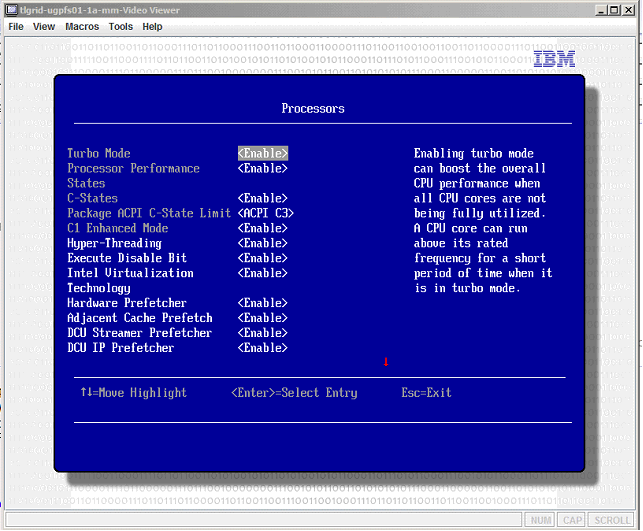
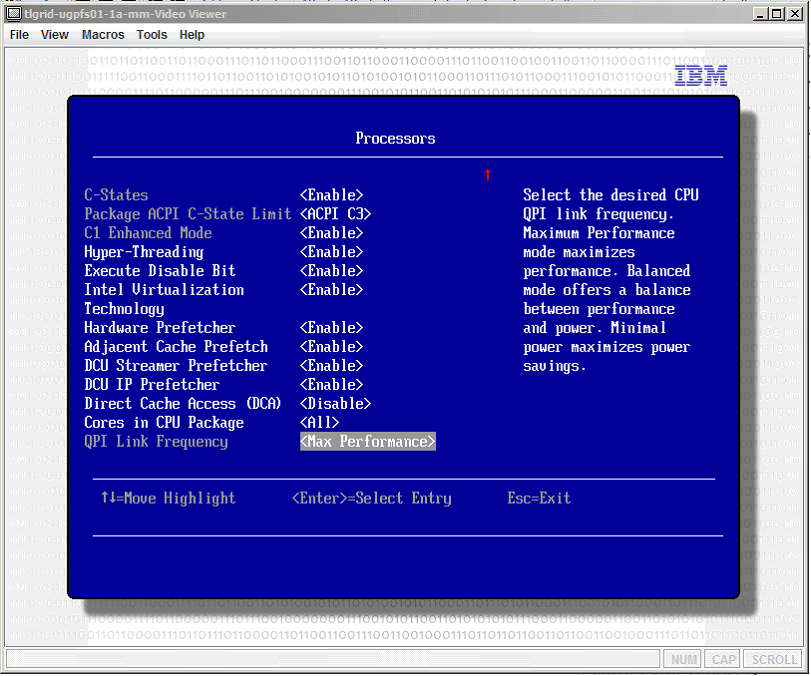
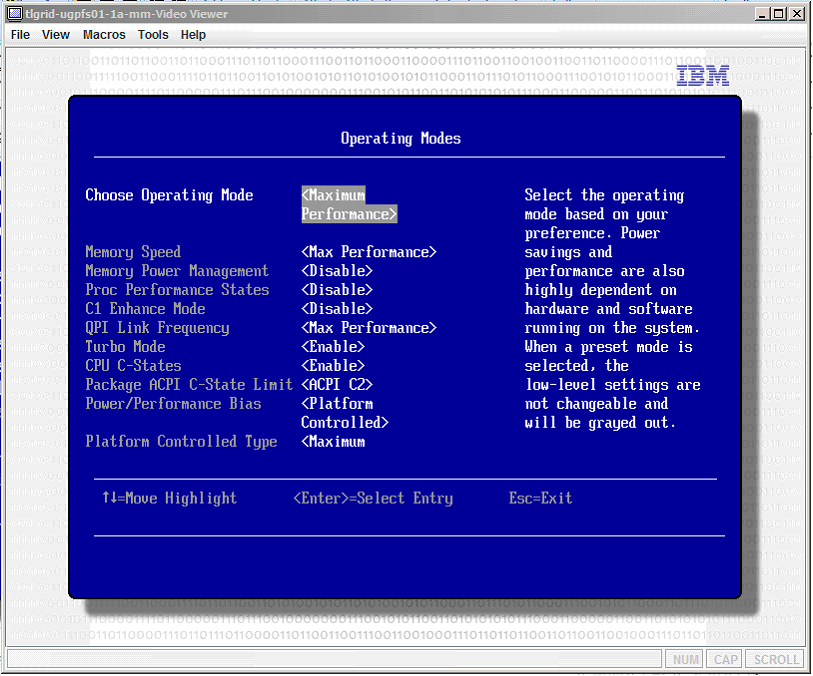
Hi,
So the problem was some bad ib routing. We changed some ib links, and then we got also 12GB/s read with nsdperf. On our clients we then are able to achieve the 7,2GB/s in total we also saw using the nsd servers!
This is good to hear.
We are now running some tests with different blocksizes and parameters, because our backend storage is able to do more than the 7.2GB/s we get with GPFS (more like 14GB/s in total). I guess prefetchthreads and nsdworkerthreads are the ones to look at?
If you are on 4.2.0.3 or higher, you can use workerThreads config paramter (start with value of 128, and increase in increments of 128 until MAX supported) and this setting will auto adjust values for other parameters such as prefetchThreads, worker3Threads etc. https://www.ibm.com/developerworks/community/wikis/home?lang=en#!/wiki/Gener... In addition to trying larger file-system block-size (e.g. 4MiB or higher such that is aligns with storage volume RAID-stripe-width) and config parameters (e.g , workerThreads, ignorePrefetchLUNCount), it will be good to assess the "backend storage" performance for random I/O access pattern (with block I/O sizes in units of FS block-size) as this is more likely I/O scenario that the backend storage will experience when you have many GPFS nodes performing I/O simultaneously to the file-system (in production environment). mmcrfs has option "[-j {cluster | scatter}]". "-j scatter" would be recommended for consistent file-system performance over the lifetime of the file-system but then "-j scatter" will result in random I/O to backend storage (even though application is performing sequential I/O). For your test purposes, you may assess the GPFS file-system performance by mmcrfs with "-j cluster" and you may see good sequential results (compared to -j scatter) for lower client counts but as you scale the client counts the combined workload can result in "-j scatter" to backend storage (limiting the FS performance to random I/O performance of the backend storage). [snip from mmcrfs] layoutMap={scatter | cluster} Specifies the block allocation map type. When allocating blocks for a given file, GPFS first uses a round‐robin algorithm to spread the data across all disks in the storage pool. After a disk is selected, the location of the data block on the disk is determined by the block allocation map type. If cluster is specified, GPFS attempts to allocate blocks in clusters. Blocks that belong to a particular file are kept adjacent to each other within each cluster. If scatter is specified, the location of the block is chosen randomly. The cluster allocation method may provide better disk performance for some disk subsystems in relatively small installations. The benefits of clustered block allocation diminish when the number of nodes in the cluster or the number of disks in a file system increases, or when the file system’s free space becomes fragmented. The cluster allocation method is the default for GPFS clusters with eight or fewer nodes and for file systems with eight or fewer disks. The scatter allocation method provides more consistent file system performance by averaging out performance variations due to block location (for many disk subsystems, the location of the data relative to the disk edge has a substantial effect on performance). This allocation method is appropriate in most cases and is the default for GPFS clusters with more than eight nodes or file systems with more than eight disks. The block allocation map type cannot be changed after the storage pool has been created. .. .. -j {cluster | scatter} Specifies the default block allocation map type to be used if layoutMap is not specified for a given storage pool. [/snip from mmcrfs] My two cents, -Kums From: Kenneth Waegeman <kenneth.waegeman@ugent.be> To: gpfsug main discussion list <gpfsug-discuss@spectrumscale.org> Date: 05/04/2017 09:23 AM Subject: Re: [gpfsug-discuss] bizarre performance behavior Sent by: gpfsug-discuss-bounces@spectrumscale.org Hi, We found out using ib_read_bw and ib_write_bw that there were some links between server and clients degraded, having a bandwith of 350MB/s strangely, nsdperf did not report the same. It reported 12GB/s write and 9GB/s read, which was much more then we actually could achieve. So the problem was some bad ib routing. We changed some ib links, and then we got also 12GB/s read with nsdperf. On our clients we then are able to achieve the 7,2GB/s in total we also saw using the nsd servers! Many thanks for the help !! We are now running some tests with different blocksizes and parameters, because our backend storage is able to do more than the 7.2GB/s we get with GPFS (more like 14GB/s in total). I guess prefetchthreads and nsdworkerthreads are the ones to look at? Cheers! Kenneth On 21/04/17 22:27, Kumaran Rajaram wrote: Hi Kenneth, As it was mentioned earlier, it will be good to first verify the raw network performance between the NSD client and NSD server using the nsdperf tool that is built with RDMA support. g++ -O2 -DRDMA -o nsdperf -lpthread -lrt -libverbs -lrdmacm nsdperf.C In addition, since you have 2 x NSD servers it will be good to perform NSD client file-system performance test with just single NSD server (mmshutdown the other server, assuming all the NSDs have primary, server NSD server configured + Quorum will be intact when a NSD server is brought down) to see if it helps to improve the read performance + if there are variations in the file-system read bandwidth results between NSD_server#1 'active' vs. NSD_server #2 'active' (with other NSD server in GPFS "down" state). If there is significant variation, it can help to isolate the issue to particular NSD server (HW or IB issue?). You can issue "mmdiag --waiters" on NSD client as well as NSD servers during your dd test, to verify if there are unsual long GPFS waiters. In addition, you may issue Linux "perf top -z" command on the GPFS node to see if there is high CPU usage by any particular call/event (for e.g., If GPFS config parameter verbsRdmaMaxSendBytes has been set to low value from the default 16M, then it can cause RDMA completion threads to go CPU bound ). Please verify some performance scenarios detailed in Chapter 22 in Spectrum Scale Problem Determination Guide (link below). https://www.ibm.com/support/knowledgecenter/en/STXKQY_4.2.3/com.ibm.spectrum... Thanks, -Kums From: Kenneth Waegeman <kenneth.waegeman@ugent.be> To: gpfsug main discussion list <gpfsug-discuss@spectrumscale.org> Date: 04/21/2017 11:43 AM Subject: Re: [gpfsug-discuss] bizarre performance behavior Sent by: gpfsug-discuss-bounces@spectrumscale.org Hi, We already verified this on our nsds: [root@nsd00 ~]# /opt/dell/toolkit/bin/syscfg --QpiSpeed QpiSpeed=maxdatarate [root@nsd00 ~]# /opt/dell/toolkit/bin/syscfg --turbomode turbomode=enable [root@nsd00 ~]# /opt/dell/toolkit/bin/syscfg ‐-SysProfile SysProfile=perfoptimized so sadly this is not the issue. Also the output of the verbs commands look ok, there are connections from the client to the nsds are there is data being read and writen. Thanks again! Kenneth On 21/04/17 16:01, Kumaran Rajaram wrote: Hi, Try enabling the following in the BIOS of the NSD servers (screen shots below) Turbo Mode - Enable QPI Link Frequency - Max Performance Operating Mode - Maximum Performance
While we have even better performance with sequential reads on raw storage LUNS, using GPFS we can only reach 1GB/s in total (each nsd server seems limited by 0,5GB/s) independent of the number of clients We are testing from 2 testing machines connected to the nsds with infiniband, verbs enabled.
Also, It will be good to verify that all the GPFS nodes have Verbs RDMA started using "mmfsadm test verbs status" and that the NSD client-server communication from client to server during "dd" is actually using Verbs RDMA using "mmfsadm test verbs conn" command (on NSD client doing dd). If not, then GPFS might be using TCP/IP network over which the cluster is configured impacting performance (If this is the case, GPFS mmfs.log.latest for any Verbs RDMA related errors and resolve). Regards, -Kums From: "Knister, Aaron S. (GSFC-606.2)[COMPUTER SCIENCE CORP]" <aaron.s.knister@nasa.gov> To: gpfsug main discussion list <gpfsug-discuss@spectrumscale.org> Date: 04/21/2017 09:11 AM Subject: Re: [gpfsug-discuss] bizarre performance behavior Sent by: gpfsug-discuss-bounces@spectrumscale.org Fantastic news! It might also be worth running "cpupower monitor" or "turbostat" on your NSD servers while you're running dd tests from the clients to see what CPU frequency your cores are actually running at. A typical NSD server workload (especially with IB verbs and for reads) can be pretty light on CPU which might not prompt your CPU crew governor to up the frequency (which can affect throughout). If your frequency scaling governor isn't kicking up the frequency of your CPUs I've seen that cause this behavior in my testing. -Aaron On April 21, 2017 at 05:43:40 EDT, Kenneth Waegeman <kenneth.waegeman@ugent.be>wrote: Hi, We are running a test setup with 2 NSD Servers backed by 4 Dell Powervaults MD3460s. nsd00 is primary serving LUNS of controller A of the 4 powervaults, nsd02 is primary serving LUNS of controller B. We are testing from 2 testing machines connected to the nsds with infiniband, verbs enabled. When we do dd from the NSD servers, we see indeed performance going to 5.8GB/s for one nsd, 7.2GB/s for the two! So it looks like GPFS is able to get the data at a decent speed. Since we can write from the clients at a good speed, I didn't suspect the communication between clients and nsds being the issue, especially since total performance stays the same using 1 or multiple clients. I'll use the nsdperf tool to see if we can find anything, thanks! K On 20/04/17 17:04, Knister, Aaron S. (GSFC-606.2)[COMPUTER SCIENCE CORP] wrote: Interesting. Could you share a little more about your architecture? Is it possible to mount the fs on an NSD server and do some dd's from the fs on the NSD server? If that gives you decent performance perhaps try NSDPERF next https://www.ibm.com/developerworks/community/wikis/home?lang=en#!/wiki/Gener... -Aaron On April 20, 2017 at 10:53:47 EDT, Kenneth Waegeman <kenneth.waegeman@ugent.be>wrote: Hi, Having an issue that looks the same as this one: We can do sequential writes to the filesystem at 7,8 GB/s total , which is the expected speed for our current storage backend. While we have even better performance with sequential reads on raw storage LUNS, using GPFS we can only reach 1GB/s in total (each nsd server seems limited by 0,5GB/s) independent of the number of clients (1,2,4,..) or ways we tested (fio,dd). We played with blockdev params, MaxMBps, PrefetchThreads, hyperthreading, c1e/cstates, .. as discussed in this thread, but nothing seems to impact this read performance. Any ideas? Thanks! Kenneth On 17/02/17 19:29, Jan-Frode Myklebust wrote: I just had a similar experience from a sandisk infiniflash system SAS-attached to s single host. Gpfsperf reported 3,2 Gbyte/s for writes. and 250-300 Mbyte/s on sequential reads!! Random reads were on the order of 2 Gbyte/s. After a bit head scratching snd fumbling around I found out that reducing maxMBpS from 10000 to 100 fixed the problem! Digging further I found that reducing prefetchThreads from default=72 to 32 also fixed it, while leaving maxMBpS at 10000. Can now also read at 3,2 GByte/s. Could something like this be the problem on your box as well? -jf fre. 17. feb. 2017 kl. 18.13 skrev Aaron Knister <aaron.s.knister@nasa.gov
: Well, I'm somewhat scrounging for hardware. This is in our test environment :) And yep, it's got the 2U gpu-tray in it although even without the riser it has 2 PCIe slots onboard (excluding the on-board dual-port mezz card) so I think it would make a fine NSD server even without the riser.
-Aaron On 2/17/17 11:43 AM, Simon Thompson (Research Computing - IT Services) wrote:
Maybe its related to interrupt handlers somehow? You drive the load up on one socket, you push all the interrupt handling to the other socket where the fabric card is attached?
Dunno ... (Though I am intrigued you use idataplex nodes as NSD servers, I assume its some 2U gpu-tray riser one or something !)
Simon ________________________________________ From: gpfsug-discuss-bounces@spectrumscale.org[ gpfsug-discuss-bounces@spectrumscale.org] on behalf of Aaron Knister [ aaron.s.knister@nasa.gov] Sent: 17 February 2017 15:52 To: gpfsug main discussion list Subject: [gpfsug-discuss] bizarre performance behavior
This is a good one. I've got an NSD server with 4x 16GB fibre connections coming in and 1x FDR10 and 1x QDR connection going out to the clients. I was having a really hard time getting anything resembling sensible performance out of it (4-5Gb/s writes but maybe 1.2Gb/s for reads). The back-end is a DDN SFA12K and I *know* it can do better than that.
I don't remember quite how I figured this out but simply by running "openssl speed -multi 16" on the nsd server to drive up the load I saw an almost 4x performance jump which is pretty much goes against every sysadmin fiber in me (i.e. "drive up the cpu load with unrelated crap to quadruple your i/o performance").
This feels like some type of C-states frequency scaling shenanigans that I haven't quite ironed down yet. I booted the box with the following kernel parameters "intel_idle.max_cstate=0 processor.max_cstate=0" which didn't seem to make much of a difference. I also tried setting the frequency governer to userspace and setting the minimum frequency to 2.6ghz (it's a 2.6ghz cpu). None of that really matters-- I still have to run something to drive up the CPU load and then performance improves.
I'm wondering if this could be an issue with the C1E state? I'm curious if anyone has seen anything like this. The node is a dx360 M4 (Sandybridge) with 16 2.6GHz cores and 32GB of RAM.
-Aaron
-- Aaron Knister NASA Center for Climate Simulation (Code 606.2) Goddard Space Flight Center (301) 286-2776 _______________________________________________ gpfsug-discuss mailing list gpfsug-discuss at spectrumscale.org http://gpfsug.org/mailman/listinfo/gpfsug-discuss _______________________________________________ gpfsug-discuss mailing list gpfsug-discuss at spectrumscale.org http://gpfsug.org/mailman/listinfo/gpfsug-discuss
-- Aaron Knister NASA Center for Climate Simulation (Code 606.2) Goddard Space Flight Center (301) 286-2776 _______________________________________________ gpfsug-discuss mailing list gpfsug-discuss at spectrumscale.org http://gpfsug.org/mailman/listinfo/gpfsug-discuss _______________________________________________ gpfsug-discuss mailing list gpfsug-discuss at spectrumscale.org http://gpfsug.org/mailman/listinfo/gpfsug-discuss _______________________________________________ gpfsug-discuss mailing list gpfsug-discuss at spectrumscale.org http://gpfsug.org/mailman/listinfo/gpfsug-discuss _______________________________________________ gpfsug-discuss mailing list gpfsug-discuss at spectrumscale.org http://gpfsug.org/mailman/listinfo/gpfsug-discuss _______________________________________________ gpfsug-discuss mailing list gpfsug-discuss at spectrumscale.org http://gpfsug.org/mailman/listinfo/gpfsug-discuss _______________________________________________ gpfsug-discuss mailing list gpfsug-discuss at spectrumscale.org http://gpfsug.org/mailman/listinfo/gpfsug-discuss _______________________________________________ gpfsug-discuss mailing list gpfsug-discuss at spectrumscale.org http://gpfsug.org/mailman/listinfo/gpfsug-discuss _______________________________________________ gpfsug-discuss mailing list gpfsug-discuss at spectrumscale.org http://gpfsug.org/mailman/listinfo/gpfsug-discuss
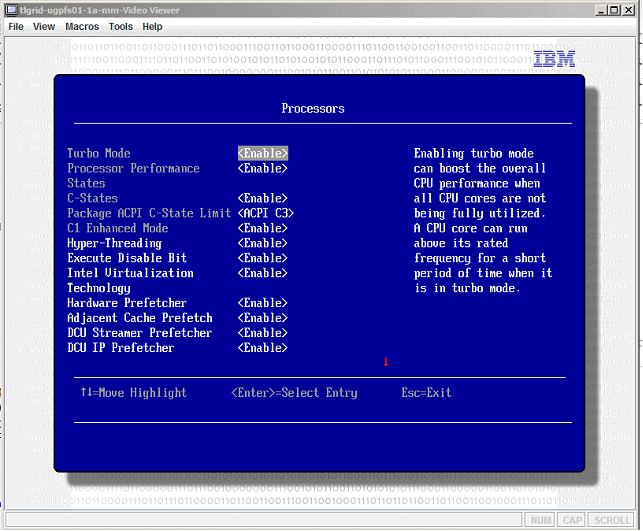
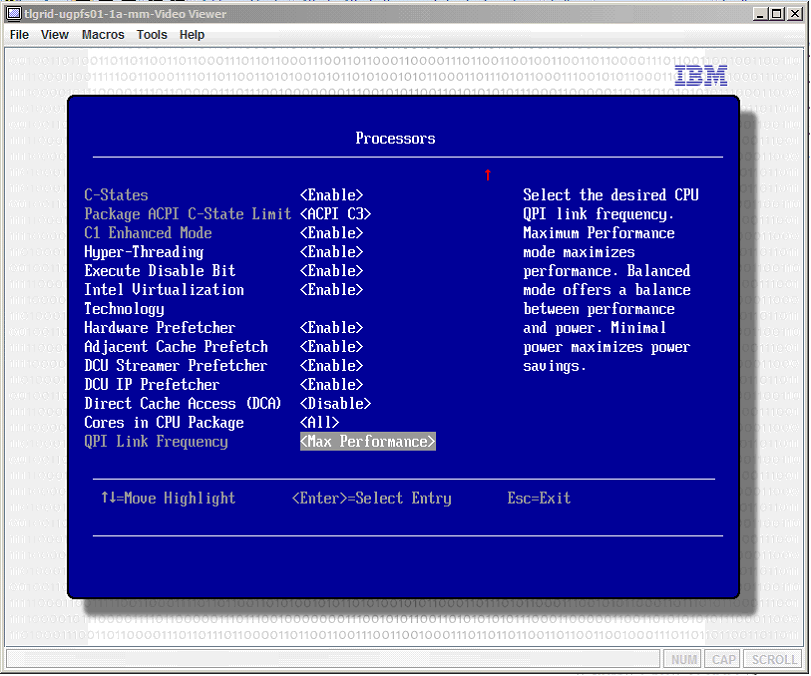
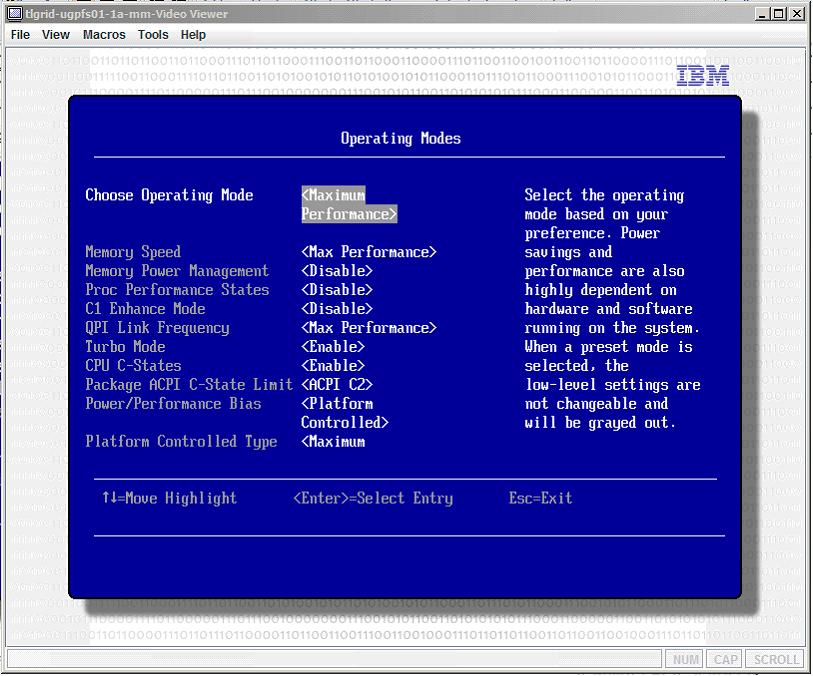
On 21/04/17 15:10, Knister, Aaron S. (GSFC-606.2)[COMPUTER SCIENCE CORP] wrote:
Fantastic news! It might also be worth running "cpupower monitor" or "turbostat" on your NSD servers while you're running dd tests from the clients to see what CPU frequency your cores are actually running at. Thanks! I verified with turbostat and cpuinfo, our cpus are running in high performance mode and frequency is always at highest level.
A typical NSD server workload (especially with IB verbs and for reads) can be pretty light on CPU which might not prompt your CPU crew governor to up the frequency (which can affect throughout). If your frequency scaling governor isn't kicking up the frequency of your CPUs I've seen that cause this behavior in my testing.
-Aaron
On April 21, 2017 at 05:43:40 EDT, Kenneth Waegeman <kenneth.waegeman@ugent.be> wrote:
Hi,
We are running a test setup with 2 NSD Servers backed by 4 Dell Powervaults MD3460s. nsd00 is primary serving LUNS of controller A of the 4 powervaults, nsd02 is primary serving LUNS of controller B.
We are testing from 2 testing machines connected to the nsds with infiniband, verbs enabled.
When we do dd from the NSD servers, we see indeed performance going to 5.8GB/s for one nsd, 7.2GB/s for the two! So it looks like GPFS is able to get the data at a decent speed. Since we can write from the clients at a good speed, I didn't suspect the communication between clients and nsds being the issue, especially since total performance stays the same using 1 or multiple clients.
I'll use the nsdperf tool to see if we can find anything,
thanks!
K
On 20/04/17 17:04, Knister, Aaron S. (GSFC-606.2)[COMPUTER SCIENCE CORP] wrote:
Interesting. Could you share a little more about your architecture? Is it possible to mount the fs on an NSD server and do some dd's from the fs on the NSD server? If that gives you decent performance perhaps try NSDPERF next https://www.ibm.com/developerworks/community/wikis/home?lang=en#!/wiki/Gener... <https://www.ibm.com/developerworks/community/wikis/home?lang=en#%21/wiki/Gen...>
-Aaron
On April 20, 2017 at 10:53:47 EDT, Kenneth Waegeman <kenneth.waegeman@ugent.be> <mailto:kenneth.waegeman@ugent.be> wrote:
Hi,
Having an issue that looks the same as this one:
We can do sequential writes to the filesystem at 7,8 GB/s total , which is the expected speed for our current storage backend. While we have even better performance with sequential reads on raw storage LUNS, using GPFS we can only reach 1GB/s in total (each nsd server seems limited by 0,5GB/s) independent of the number of clients (1,2,4,..) or ways we tested (fio,dd). We played with blockdev params, MaxMBps, PrefetchThreads, hyperthreading, c1e/cstates, .. as discussed in this thread, but nothing seems to impact this read performance.
Any ideas?
Thanks!
Kenneth
On 17/02/17 19:29, Jan-Frode Myklebust wrote:
I just had a similar experience from a sandisk infiniflash system SAS-attached to s single host. Gpfsperf reported 3,2 Gbyte/s for writes. and 250-300 Mbyte/s on sequential reads!! Random reads were on the order of 2 Gbyte/s.
After a bit head scratching snd fumbling around I found out that reducing maxMBpS from 10000 to 100 fixed the problem! Digging further I found that reducing prefetchThreads from default=72 to 32 also fixed it, while leaving maxMBpS at 10000. Can now also read at 3,2 GByte/s.
Could something like this be the problem on your box as well?
-jf fre. 17. feb. 2017 kl. 18.13 skrev Aaron Knister <aaron.s.knister@nasa.gov <mailto:aaron.s.knister@nasa.gov>>:
Well, I'm somewhat scrounging for hardware. This is in our test environment :) And yep, it's got the 2U gpu-tray in it although even without the riser it has 2 PCIe slots onboard (excluding the on-board dual-port mezz card) so I think it would make a fine NSD server even without the riser.
-Aaron
On 2/17/17 11:43 AM, Simon Thompson (Research Computing - IT Services) wrote: > Maybe its related to interrupt handlers somehow? You drive the load up on one socket, you push all the interrupt handling to the other socket where the fabric card is attached? > > Dunno ... (Though I am intrigued you use idataplex nodes as NSD servers, I assume its some 2U gpu-tray riser one or something !) > > Simon > ________________________________________ > From: gpfsug-discuss-bounces@spectrumscale.org <mailto:gpfsug-discuss-bounces@spectrumscale.org> [gpfsug-discuss-bounces@spectrumscale.org <mailto:gpfsug-discuss-bounces@spectrumscale.org>] on behalf of Aaron Knister [aaron.s.knister@nasa.gov <mailto:aaron.s.knister@nasa.gov>] > Sent: 17 February 2017 15:52 > To: gpfsug main discussion list > Subject: [gpfsug-discuss] bizarre performance behavior > > This is a good one. I've got an NSD server with 4x 16GB fibre > connections coming in and 1x FDR10 and 1x QDR connection going out to > the clients. I was having a really hard time getting anything resembling > sensible performance out of it (4-5Gb/s writes but maybe 1.2Gb/s for > reads). The back-end is a DDN SFA12K and I *know* it can do better than > that. > > I don't remember quite how I figured this out but simply by running > "openssl speed -multi 16" on the nsd server to drive up the load I saw > an almost 4x performance jump which is pretty much goes against every > sysadmin fiber in me (i.e. "drive up the cpu load with unrelated crap to > quadruple your i/o performance"). > > This feels like some type of C-states frequency scaling shenanigans that > I haven't quite ironed down yet. I booted the box with the following > kernel parameters "intel_idle.max_cstate=0 processor.max_cstate=0" which > didn't seem to make much of a difference. I also tried setting the > frequency governer to userspace and setting the minimum frequency to > 2.6ghz (it's a 2.6ghz cpu). None of that really matters-- I still have > to run something to drive up the CPU load and then performance improves. > > I'm wondering if this could be an issue with the C1E state? I'm curious > if anyone has seen anything like this. The node is a dx360 M4 > (Sandybridge) with 16 2.6GHz cores and 32GB of RAM. > > -Aaron > > -- > Aaron Knister > NASA Center for Climate Simulation (Code 606.2) > Goddard Space Flight Center > (301) 286-2776 > _______________________________________________ > gpfsug-discuss mailing list > gpfsug-discuss at spectrumscale.org <http://spectrumscale.org> > http://gpfsug.org/mailman/listinfo/gpfsug-discuss > _______________________________________________ > gpfsug-discuss mailing list > gpfsug-discuss at spectrumscale.org <http://spectrumscale.org> > http://gpfsug.org/mailman/listinfo/gpfsug-discuss >
-- Aaron Knister NASA Center for Climate Simulation (Code 606.2) Goddard Space Flight Center (301) 286-2776 _______________________________________________ gpfsug-discuss mailing list gpfsug-discuss at spectrumscale.org <http://spectrumscale.org> http://gpfsug.org/mailman/listinfo/gpfsug-discuss
_______________________________________________ gpfsug-discuss mailing list gpfsug-discuss at spectrumscale.org http://gpfsug.org/mailman/listinfo/gpfsug-discuss
_______________________________________________ gpfsug-discuss mailing list gpfsug-discuss at spectrumscale.org http://gpfsug.org/mailman/listinfo/gpfsug-discuss
_______________________________________________ gpfsug-discuss mailing list gpfsug-discuss at spectrumscale.org http://gpfsug.org/mailman/listinfo/gpfsug-discuss

Hi Kennmeth, is prefetching off or on at your storage backend? Raw sequential is very different from GPFS sequential at the storage device ! GPFS does its own prefetching, the storage would never know what sectors sequential read at GPFS level maps to at storage level! Mit freundlichen Grüßen / Kind regards Dr. Uwe Falke IT Specialist High Performance Computing Services / Integrated Technology Services / Data Center Services ------------------------------------------------------------------------------------------------------------------------------------------- IBM Deutschland Rathausstr. 7 09111 Chemnitz Phone: +49 371 6978 2165 Mobile: +49 175 575 2877 E-Mail: uwefalke@de.ibm.com ------------------------------------------------------------------------------------------------------------------------------------------- IBM Deutschland Business & Technology Services GmbH / Geschäftsführung: Andreas Hasse, Thorsten Moehring Sitz der Gesellschaft: Ehningen / Registergericht: Amtsgericht Stuttgart, HRB 17122 From: Kenneth Waegeman <kenneth.waegeman@ugent.be> To: gpfsug main discussion list <gpfsug-discuss@spectrumscale.org> Date: 04/20/2017 04:53 PM Subject: Re: [gpfsug-discuss] bizarre performance behavior Sent by: gpfsug-discuss-bounces@spectrumscale.org Hi, Having an issue that looks the same as this one: We can do sequential writes to the filesystem at 7,8 GB/s total , which is the expected speed for our current storage backend. While we have even better performance with sequential reads on raw storage LUNS, using GPFS we can only reach 1GB/s in total (each nsd server seems limited by 0,5GB/s) independent of the number of clients (1,2,4,..) or ways we tested (fio,dd). We played with blockdev params, MaxMBps, PrefetchThreads, hyperthreading, c1e/cstates, .. as discussed in this thread, but nothing seems to impact this read performance. Any ideas? Thanks! Kenneth On 17/02/17 19:29, Jan-Frode Myklebust wrote: I just had a similar experience from a sandisk infiniflash system SAS-attached to s single host. Gpfsperf reported 3,2 Gbyte/s for writes. and 250-300 Mbyte/s on sequential reads!! Random reads were on the order of 2 Gbyte/s. After a bit head scratching snd fumbling around I found out that reducing maxMBpS from 10000 to 100 fixed the problem! Digging further I found that reducing prefetchThreads from default=72 to 32 also fixed it, while leaving maxMBpS at 10000. Can now also read at 3,2 GByte/s. Could something like this be the problem on your box as well? -jf fre. 17. feb. 2017 kl. 18.13 skrev Aaron Knister <aaron.s.knister@nasa.gov
: Well, I'm somewhat scrounging for hardware. This is in our test environment :) And yep, it's got the 2U gpu-tray in it although even without the riser it has 2 PCIe slots onboard (excluding the on-board dual-port mezz card) so I think it would make a fine NSD server even without the riser.
-Aaron On 2/17/17 11:43 AM, Simon Thompson (Research Computing - IT Services) wrote:
Maybe its related to interrupt handlers somehow? You drive the load up on one socket, you push all the interrupt handling to the other socket where the fabric card is attached?
Dunno ... (Though I am intrigued you use idataplex nodes as NSD servers, I assume its some 2U gpu-tray riser one or something !)
Simon ________________________________________ From: gpfsug-discuss-bounces@spectrumscale.org [ gpfsug-discuss-bounces@spectrumscale.org] on behalf of Aaron Knister [ aaron.s.knister@nasa.gov] Sent: 17 February 2017 15:52 To: gpfsug main discussion list Subject: [gpfsug-discuss] bizarre performance behavior
This is a good one. I've got an NSD server with 4x 16GB fibre connections coming in and 1x FDR10 and 1x QDR connection going out to the clients. I was having a really hard time getting anything resembling sensible performance out of it (4-5Gb/s writes but maybe 1.2Gb/s for reads). The back-end is a DDN SFA12K and I *know* it can do better than that.
I don't remember quite how I figured this out but simply by running "openssl speed -multi 16" on the nsd server to drive up the load I saw an almost 4x performance jump which is pretty much goes against every sysadmin fiber in me (i.e. "drive up the cpu load with unrelated crap to quadruple your i/o performance").
This feels like some type of C-states frequency scaling shenanigans that I haven't quite ironed down yet. I booted the box with the following kernel parameters "intel_idle.max_cstate=0 processor.max_cstate=0" which didn't seem to make much of a difference. I also tried setting the frequency governer to userspace and setting the minimum frequency to 2.6ghz (it's a 2.6ghz cpu). None of that really matters-- I still have to run something to drive up the CPU load and then performance improves.
I'm wondering if this could be an issue with the C1E state? I'm curious if anyone has seen anything like this. The node is a dx360 M4 (Sandybridge) with 16 2.6GHz cores and 32GB of RAM.
-Aaron
-- Aaron Knister NASA Center for Climate Simulation (Code 606.2) Goddard Space Flight Center (301) 286-2776 _______________________________________________ gpfsug-discuss mailing list gpfsug-discuss at spectrumscale.org http://gpfsug.org/mailman/listinfo/gpfsug-discuss _______________________________________________ gpfsug-discuss mailing list gpfsug-discuss at spectrumscale.org http://gpfsug.org/mailman/listinfo/gpfsug-discuss
-- Aaron Knister NASA Center for Climate Simulation (Code 606.2) Goddard Space Flight Center (301) 286-2776 _______________________________________________ gpfsug-discuss mailing list gpfsug-discuss at spectrumscale.org http://gpfsug.org/mailman/listinfo/gpfsug-discuss _______________________________________________ gpfsug-discuss mailing list gpfsug-discuss at spectrumscale.org http://gpfsug.org/mailman/listinfo/gpfsug-discuss _______________________________________________ gpfsug-discuss mailing list gpfsug-discuss at spectrumscale.org http://gpfsug.org/mailman/listinfo/gpfsug-discuss
Hi, prefetching was already disabled at our storage backend, but a good thing to recheck :) thanks! On 20/04/17 17:07, Uwe Falke wrote:
Hi Kennmeth,
is prefetching off or on at your storage backend? Raw sequential is very different from GPFS sequential at the storage device ! GPFS does its own prefetching, the storage would never know what sectors sequential read at GPFS level maps to at storage level!
Mit freundlichen Grüßen / Kind regards
Dr. Uwe Falke
IT Specialist High Performance Computing Services / Integrated Technology Services / Data Center Services ------------------------------------------------------------------------------------------------------------------------------------------- IBM Deutschland Rathausstr. 7 09111 Chemnitz Phone: +49 371 6978 2165 Mobile: +49 175 575 2877 E-Mail: uwefalke@de.ibm.com ------------------------------------------------------------------------------------------------------------------------------------------- IBM Deutschland Business & Technology Services GmbH / Geschäftsführung: Andreas Hasse, Thorsten Moehring Sitz der Gesellschaft: Ehningen / Registergericht: Amtsgericht Stuttgart, HRB 17122
From: Kenneth Waegeman <kenneth.waegeman@ugent.be> To: gpfsug main discussion list <gpfsug-discuss@spectrumscale.org> Date: 04/20/2017 04:53 PM Subject: Re: [gpfsug-discuss] bizarre performance behavior Sent by: gpfsug-discuss-bounces@spectrumscale.org
Hi,
Having an issue that looks the same as this one: We can do sequential writes to the filesystem at 7,8 GB/s total , which is the expected speed for our current storage backend. While we have even better performance with sequential reads on raw storage LUNS, using GPFS we can only reach 1GB/s in total (each nsd server seems limited by 0,5GB/s) independent of the number of clients (1,2,4,..) or ways we tested (fio,dd). We played with blockdev params, MaxMBps, PrefetchThreads, hyperthreading, c1e/cstates, .. as discussed in this thread, but nothing seems to impact this read performance. Any ideas? Thanks!
Kenneth
On 17/02/17 19:29, Jan-Frode Myklebust wrote: I just had a similar experience from a sandisk infiniflash system SAS-attached to s single host. Gpfsperf reported 3,2 Gbyte/s for writes. and 250-300 Mbyte/s on sequential reads!! Random reads were on the order of 2 Gbyte/s.
After a bit head scratching snd fumbling around I found out that reducing maxMBpS from 10000 to 100 fixed the problem! Digging further I found that reducing prefetchThreads from default=72 to 32 also fixed it, while leaving maxMBpS at 10000. Can now also read at 3,2 GByte/s.
Could something like this be the problem on your box as well?
-jf fre. 17. feb. 2017 kl. 18.13 skrev Aaron Knister <aaron.s.knister@nasa.gov
: Well, I'm somewhat scrounging for hardware. This is in our test environment :) And yep, it's got the 2U gpu-tray in it although even without the riser it has 2 PCIe slots onboard (excluding the on-board dual-port mezz card) so I think it would make a fine NSD server even without the riser.
-Aaron
On 2/17/17 11:43 AM, Simon Thompson (Research Computing - IT Services) wrote:
Maybe its related to interrupt handlers somehow? You drive the load up on one socket, you push all the interrupt handling to the other socket where the fabric card is attached? Dunno ... (Though I am intrigued you use idataplex nodes as NSD servers, I assume its some 2U gpu-tray riser one or something !) Simon ________________________________________ From: gpfsug-discuss-bounces@spectrumscale.org [ gpfsug-discuss-bounces@spectrumscale.org] on behalf of Aaron Knister [ aaron.s.knister@nasa.gov] Sent: 17 February 2017 15:52 To: gpfsug main discussion list Subject: [gpfsug-discuss] bizarre performance behavior
This is a good one. I've got an NSD server with 4x 16GB fibre connections coming in and 1x FDR10 and 1x QDR connection going out to the clients. I was having a really hard time getting anything resembling sensible performance out of it (4-5Gb/s writes but maybe 1.2Gb/s for reads). The back-end is a DDN SFA12K and I *know* it can do better than that.
I don't remember quite how I figured this out but simply by running "openssl speed -multi 16" on the nsd server to drive up the load I saw an almost 4x performance jump which is pretty much goes against every sysadmin fiber in me (i.e. "drive up the cpu load with unrelated crap to quadruple your i/o performance").
This feels like some type of C-states frequency scaling shenanigans that I haven't quite ironed down yet. I booted the box with the following kernel parameters "intel_idle.max_cstate=0 processor.max_cstate=0" which didn't seem to make much of a difference. I also tried setting the frequency governer to userspace and setting the minimum frequency to 2.6ghz (it's a 2.6ghz cpu). None of that really matters-- I still have to run something to drive up the CPU load and then performance improves.
I'm wondering if this could be an issue with the C1E state? I'm curious if anyone has seen anything like this. The node is a dx360 M4 (Sandybridge) with 16 2.6GHz cores and 32GB of RAM.
-Aaron
-- Aaron Knister NASA Center for Climate Simulation (Code 606.2) Goddard Space Flight Center (301) 286-2776 _______________________________________________ gpfsug-discuss mailing list gpfsug-discuss at spectrumscale.org http://gpfsug.org/mailman/listinfo/gpfsug-discuss _______________________________________________ gpfsug-discuss mailing list gpfsug-discuss at spectrumscale.org http://gpfsug.org/mailman/listinfo/gpfsug-discuss
-- Aaron Knister NASA Center for Climate Simulation (Code 606.2) Goddard Space Flight Center (301) 286-2776 _______________________________________________ gpfsug-discuss mailing list gpfsug-discuss at spectrumscale.org http://gpfsug.org/mailman/listinfo/gpfsug-discuss
_______________________________________________ gpfsug-discuss mailing list gpfsug-discuss at spectrumscale.org http://gpfsug.org/mailman/listinfo/gpfsug-discuss
_______________________________________________ gpfsug-discuss mailing list gpfsug-discuss at spectrumscale.org http://gpfsug.org/mailman/listinfo/gpfsug-discuss
_______________________________________________ gpfsug-discuss mailing list gpfsug-discuss at spectrumscale.org http://gpfsug.org/mailman/listinfo/gpfsug-discuss
Well, disabling the C1E state seems to have done the trick. I removed the kernel parameters I mentioned and set the cpu governer back to ondemand with a minimum of 1.2ghz. I'm now getting 6.2GB/s of reads which I believe is pretty darned close to theoretical peak performance. -Aaron On 2/17/17 10:52 AM, Aaron Knister wrote:
This is a good one. I've got an NSD server with 4x 16GB fibre connections coming in and 1x FDR10 and 1x QDR connection going out to the clients. I was having a really hard time getting anything resembling sensible performance out of it (4-5Gb/s writes but maybe 1.2Gb/s for reads). The back-end is a DDN SFA12K and I *know* it can do better than that.
I don't remember quite how I figured this out but simply by running "openssl speed -multi 16" on the nsd server to drive up the load I saw an almost 4x performance jump which is pretty much goes against every sysadmin fiber in me (i.e. "drive up the cpu load with unrelated crap to quadruple your i/o performance").
This feels like some type of C-states frequency scaling shenanigans that I haven't quite ironed down yet. I booted the box with the following kernel parameters "intel_idle.max_cstate=0 processor.max_cstate=0" which didn't seem to make much of a difference. I also tried setting the frequency governer to userspace and setting the minimum frequency to 2.6ghz (it's a 2.6ghz cpu). None of that really matters-- I still have to run something to drive up the CPU load and then performance improves.
I'm wondering if this could be an issue with the C1E state? I'm curious if anyone has seen anything like this. The node is a dx360 M4 (Sandybridge) with 16 2.6GHz cores and 32GB of RAM.
-Aaron
-- Aaron Knister NASA Center for Climate Simulation (Code 606.2) Goddard Space Flight Center (301) 286-2776
participants (9)
-
 Aaron Knister
-
 Bryan Banister
-
 David D Johnson
-
 Jan-Frode Myklebust
-
 Kenneth Waegeman
-
Knister, Aaron S. (GSFC-606.2)[COMPUTER SCIENCE CORP]
-
 Kumaran Rajaram
-
 Simon Thompson (Research Computing - IT Services)
-
 Uwe Falke